Why Are Paper Containers a Good Choice for Packaging?
Paper Containers are more than a simple alternative to plastic. They can protect products, support clear branding, and fit familiar recycling systems where suitable collection is available. Yet no package is automatically sustainable. Its real impact depends on material sourcing, coatings, product protection, and what happens after use.
Packaging engineer Elena Marquez offers this practical principle: “A container is only as responsible as the system that makes, uses, and recovers it.” This is an illustrative expert perspective, not a verified quotation. It captures an important point: paper’s renewable, printable surface can be useful, but moisture barriers and mixed materials may complicate recovery. A sturdy carton on a shop shelf tells only part of the story. The product’s journey matters, too.
For businesses, Paper Containers can offer lightweight formats, convenient customization, and a tactile look that customers recognize. They may also help reduce reliance on some conventional materials, depending on the design and application. Details matter. A paper tub holding dry tea faces different demands than one carrying a chilled meal. The best choice starts with the product, not a slogan. It also asks whether the container protects contents without using more material than necessary. That balance is easy to claim and harder to measure. This guide explores the practical advantages, trade-offs, and selection factors behind paper-based packaging, including the questions buyers should ask before choosing a format.
What Paper Containers Are and How They Are Made
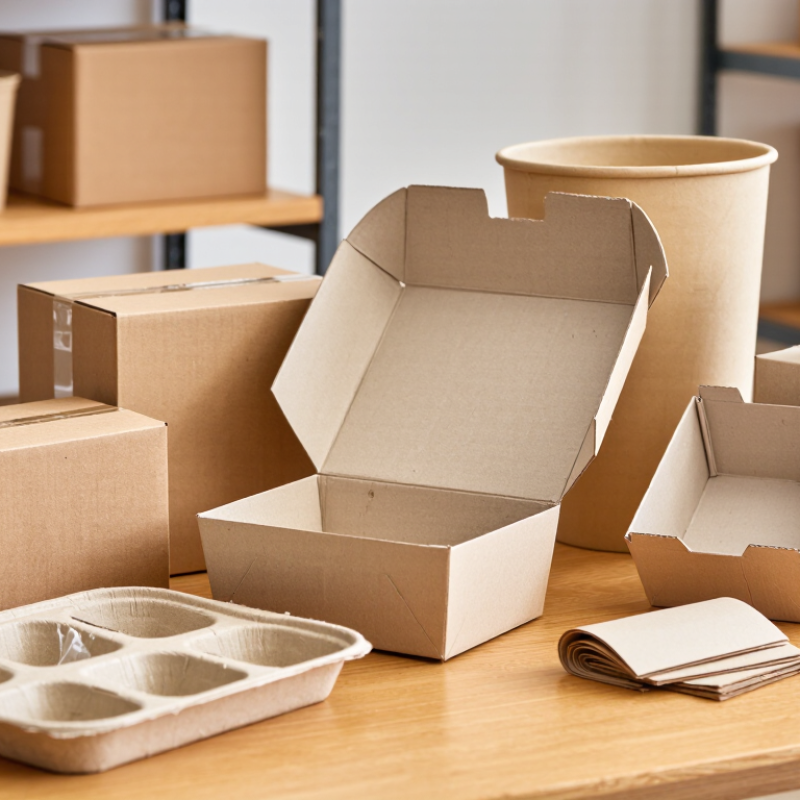
Paper containers are packages made from paperboard, corrugated board, or molded pulp. They range from a cereal carton to a protective tray shaped around delicate produce. Their main ingredient is cellulose fiber, sourced from wood pulp, recovered paper, or both. The fibers interlock.
Manufacturing begins by separating fibers from wood or used paper in water. The pulp is screened, spread into a thin layer, pressed, and dried into sheets. For molded containers, wet pulp is shaped over a mesh mold before drying. Converting equipment then cuts, creases, folds, and joins the material. A small carton can gain strength from its folds; a wet-food package may need a barrier layer. Details matter. Coatings can affect recovery, and food residue may complicate sorting.
Industry figures show why collection systems matter. CEPI’s Key Statistics 2023 reports a 79.3% paper recycling rate in Europe for 2022. The U.S. EPA’s 2018 materials-management report put the overall paper and paperboard recycling rate at 68.2%; that figure covers more than containers alone. These rates describe regional systems, not a guarantee that every package is recyclable everywhere. A practical design therefore considers fiber type, coatings, local collection, and the container’s actual use. A plain paper surface is not the whole story.
How Paper Containers Protect Packaged Products
Paper containers protect packaged products by creating a stable space around them. A well-fitted box limits shifting, reducing scuffs and pressure on corners during handling. Folded edges and layered paperboard also help resist everyday knocks. For delicate items, inserts or dividers keep pieces from colliding. Less movement often means fewer damaged products.
Protection depends on the design, not just the material. A snug fit, sturdy seams, and suitable board thickness matter when containers are stacked or moved. Paper can also help shield products from dust and light. It is not automatically moisture-proof, though. A damp delivery area can weaken untreated paper, so the packaging should match the product and shipping conditions. One detail people sometimes overlook is the lid: a loose closure can undo otherwise careful design.
Tips: Test a filled container with gentle drops and stacking. Check for shifted contents, crushed corners, and damp spots. If protection falls short, adjust the fit or add an insert. Don’t assume thicker paper solves every problem.
Environmental Benefits of Paper-Based Packaging
Paper-based packaging can reduce reliance on fossil-based plastics, especially for dry goods like cereal, tea, or takeaway pastries. When fibers come from responsibly managed forests or recycled paper, they can support a renewable or circular supply stream. A folded carton is easy to flatten after use, and clean paper is accepted in many curbside recycling programs. Check local rules. Recycling access and accepted grades differ by community.
The environmental benefit is not automatic. Plastic linings, grease, food residue, and mixed-material windows can make a box harder to recycle. Pulping and drying paper also use water and energy, while heavier packages can add transport emissions. Trade-offs matter. Compare package weight, protection, recycled-fiber content, and local end-of-life options. A thin carton that fails and causes product waste may be worse than a sturdier design. That part is easy to overlook. A greasy pastry box may need different handling from a clean tea carton.
Practical and Branding Advantages for Businesses
Paper containers can simplify routine packing for cafés, bakeries, and small retailers. A stack of flat-folding cartons takes up less shelf space than bulky pre-formed packaging. Staff can assemble them quickly during a busy lunch rush. For pastries, a paper box with a fitted insert helps prevent delicate icing from rubbing against the lid. Small details like secure tabs and grease-resistant liners can reduce leaks and messy handoffs.
Paper is not right for every product. Moist foods may need a suitable inner barrier, and coatings can affect whether a container is accepted for recycling locally. Businesses should test packaging with the actual product, including its temperature and storage time. A short trial can reveal problems that a sample box on a desk will not. That matters.
The surface also offers a useful branding space. A simple logo, a clear product name, or a small printed pattern can help customers recognize an order at a glance. Natural paper tones may feel warm and handmade, while clean colors can look precise and modern. Consistent packaging across takeaway boxes, sleeves, and bags makes a business easier to remember. Still, more printing is not always better; crowded graphics can make useful details harder to read. A practical design leaves room for labels, dates, and the customer’s hands.
Limitations and Factors to Consider When Choosing Paper Containers
Paper containers can be lightweight, printable, and easy to shape for many foods. Their limits become clearer when products meet moisture, grease, heat, or long delivery times. A crisp paper box may soften beside a hot, oily meal. Small details matter.
The container’s barrier layer deserves close attention. Uncoated paper can absorb liquids, while coatings or liners may affect local recycling options. Rules and facilities differ by area, so a recycling label alone may not tell the whole story. Check with local waste services. Also consider whether the package must hold food safely for several hours, not just look sturdy on a shelf. A design that works for dry biscuits may fail with sauced noodles.
Strength and fit matter during storage and transport. A shallow tray can bend under stacked portions, and a loose lid may leak when a delivery bag tilts. Ask suppliers for material and food-contact documentation, then test samples with the actual food, temperature, and handling routine. It is easy to overestimate a container after one quick check. Real use is messier. Cost, storage space, and the need for extra wraps can also change whether paper is the practical choice.
Why Choose Paper Containers? Recycling Rates and Key Considerations
In the United States, 68.2% of paper and paperboard and 8.7% of plastics were recycled in 2018. These figures cover the broad material categories, not packaging alone. Paper containers can be a good choice where collection and recycling facilities are available, but coatings, food residue, and local recycling rules may affect whether a specific container can be recycled.
Source: U.S. Environmental Protection Agency, Advancing Sustainable Materials Management: 2018 Fact Sheet.