Why Choose a Transfer Tank and Pump for Global Supply?
Why Choose a Transfer Tank and Pump for Global Supply? The answer begins with control. A well-designed Transfer Tank And Pump system can move liquids safely, consistently, and efficiently between storage points, vehicles, and remote facilities. It helps reduce manual handling, product waste, and unnecessary delivery delays.
Dr. Heinz P. Bloch, a widely published pump and machinery engineer, once observed, “A pump is only as good as the system in which it operates.” That principle matters in international supply chains. Tank capacity, pump compatibility, hose length, filtration, grounding, and flow control must work together. A 500-liter tank may suit a service vehicle, while a larger unit may support construction, agriculture, or emergency logistics. The right choice depends on the liquid, temperature, viscosity, distance, and operating environment.
Reliability also depends on details people sometimes overlook. A clear level indicator prevents overfilling. A sealed cap limits contamination. A calibrated meter improves inventory records. Strong mounting points reduce movement on rough roads. These features make daily operations more predictable, especially when replacement parts are not nearby. However, a Transfer Tank And Pump is not automatically a universal solution. Regional standards, transport rules, electrical requirements, and site procedures still need professional review.
That part is easy to underestimate.
This guide examines practical selection criteria, operating benefits, and common design mistakes. It also considers maintenance access, documentation, and supplier support across borders. The goal is not to promise perfection. It is to build a dependable transfer process that performs consistently, even when conditions are less than ideal.
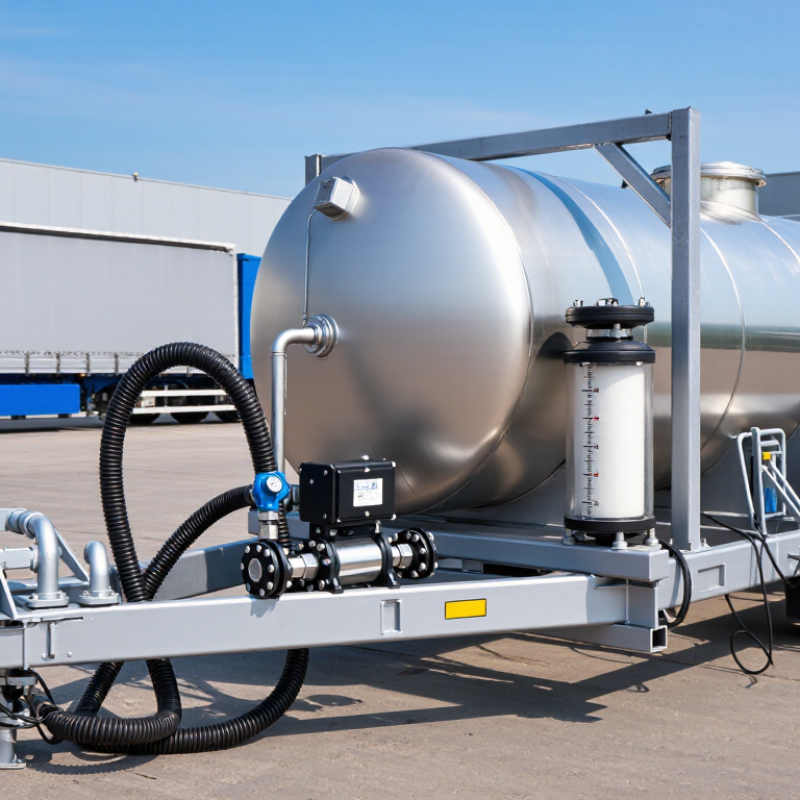
Define Transfer Tanks: 1,000-L IBCs for Standardized Global Handling
A transfer tank is a reusable 1,000-liter intermediate bulk container designed for controlled liquid movement. Its standard footprint fits common pallets, storage areas, and freight equipment. This consistency helps teams load, unload, and inspect shipments with fewer surprises.
A tank and pump work as one practical handling system. The pump can move liquid into production vessels, service equipment, or smaller containers without repeated manual lifting. Operators should confirm fluid compatibility, pump capacity, hose condition, and grounding requirements before use. A visible fill scale helps prevent overfilling. Small details matter.
In field operations, clear identification improves every handoff. Labels should show the contents, batch reference, fill date, and handling instructions. Inspection records should also travel with the unit when possible. Global supply is not completely uniform; connection sizes, electrical standards, and transport rules can differ by destination. A 1,000-liter IBC does not solve every problem. That is worth admitting. Local checks still matter. Clean fittings, secure closures, and a tested pump often prevent delays that appear expensive later. With disciplined inspection and accurate documentation, standardized transfer tanks can make international handling more predictable, measurable, and easier to train across different facilities.
Verify Compliance: UN 31HA1, ADR, IMDG, and DOT Transport Requirements
Why Choose a Transfer Tank and Pump for Global Supply?
Global transport demands more than a strong tank and efficient pump. UNCTAD’s Review of Maritime Transport reports that over 80% of global merchandise trade moves by sea. That makes IMDG compliance essential for ocean shipments. A tank marked UN 31HA1 must match its tested design, capacity, closure system, and permitted contents. The marking alone is not enough. Check the certificate, manufacturing date, inspection records, and maximum filling level.
ADR requirements apply when road transport crosses European routes. They can cover packaging, vehicle equipment, labeling, documentation, and driver responsibilities. In the United States, DOT rules under 49 CFR govern hazardous-material packaging and transport. Pump assemblies also deserve attention. Confirm grounding, leak prevention, pressure ratings, hose compatibility, and emergency shutoff performance. A pump may work perfectly on site but fail during vibration, temperature changes, or repeated loading.
Experience shows that paperwork often receives less attention than hardware. That is a costly weakness. Compare the tank’s approval with the actual liquid, route, transport mode, and destination rules. Safety Data Sheets should support this review. Requirements can change, and local enforcement may interpret details differently. Recheck before every shipment. Small errors matter.
Select Pump Capacity: 20–60 L/min Flow for Efficient Liquid Transfer
A transfer tank with the right pump capacity can simplify liquid handling across warehouses, farms, and production sites. A 20–60 L/min flow range supports controlled transfer without creating unnecessary pressure. Lower flow works well for narrow hoses, small containers, or delicate liquids. Higher flow suits larger tanks and shorter transfer times. The best choice depends on viscosity, hose length, elevation, and the liquid’s temperature.
Tips: Check the pump’s tested flow rate, not only its maximum rating. Measure performance under real conditions. A long hose or raised outlet can reduce actual flow. Use compatible seals and fittings, then inspect them regularly. Keep the tank stable during transfer. Small leaks can become serious losses.
In practical use, matching pump capacity to the transfer task improves control and reduces waiting time. A 20 L/min setting may prevent splashing when filling smaller containers. A 60 L/min setting can help move larger volumes efficiently, but only when the hose and fittings can handle it. More speed is not always better. An oversized pump may cause foaming, spills, or unnecessary wear. It is easy to rely on a specification sheet alone, yet field conditions often differ. Record transfer times, check connections, and adjust the selected flow after testing. Reliable operation comes from measured performance, not guesswork.
Optimize Logistics: ISO 6346 Containers and Multimodal Supply Chains
Why Choose a Transfer Tank and Pump for Global Supply?
A transfer tank with a compatible pump can simplify fluid movement across road, rail, and sea. The key is intermodal readiness. ISO 6346 identification gives each container a readable code, supporting consistent tracking at terminals and warehouses. It does not certify tank safety. Operators must verify pressure ratings, materials, inspections, and local transport requirements.
UNCTAD’s Review of Maritime Transport 2023 states that about 80% of global trade by volume moves by sea. This makes container compatibility a practical supply-chain concern, not a technical detail. An ISO-marked tank can move through several handling points with fewer product transfers. That reduces exposure to spills, contamination, and manual connection errors. Pumps also support controlled discharge beside a storage vessel or production line.
Small details matter.
The World Bank’s Logistics Performance Index 2023 highlights tracking, timeliness, and infrastructure as major logistics capabilities. A tank with clear identification, calibrated flow equipment, and documented maintenance supports all three. However, transfer speed should not become the only target. A powerful pump may create pressure problems, while a slow pump can delay unloading. This trade-off deserves testing with the actual fluid, hose length, temperature, and receiving equipment. Data helps, but field conditions can still disagree.