
What Are the Top 10 Types of Driving Laser Diodes?
Driving Laser Diodes are becoming essential across communications, sensing, manufacturing, healthcare, and consumer electronics. Their compact size supports precise optical performance.
The market is expanding, but “top” depends on application. A 405 nm diode may read optical media, while a 905 nm device can support automotive sensing. A 980 nm diode often pumps fiber lasers and amplifiers. These differences affect wavelength, output power, beam quality, cooling, lifetime, and cost.
Industry reports show strong demand. MarketsandMarkets’ Laser Diode Market report identifies communications, industrial applications, and photonics as major growth areas. Yole Group’s automotive LiDAR research also highlights rising interest in semiconductor emitters for vehicle sensing. Meanwhile, the International Energy Agency reports continued global electric vehicle growth, supporting demand for reliable optical sensing systems. These reports do not describe identical markets, so their figures should not be compared directly.
That distinction matters.
This guide examines ten widely used types of Driving Laser Diodes. It considers edge-emitting, vertical-cavity, single-mode, multimode, high-power, and wavelength-specific designs. Each type has practical strengths and limitations. Some offer excellent beam quality but lower power. Others deliver intense output but require careful thermal management.
The classification is not universal. Manufacturers may name similar products differently. Datasheets can also hide important details, such as duty cycle, spectral width, or temperature drift. Engineers should verify test conditions before selecting a device. Safety remains equally important, especially under IEC 60825-1 requirements.
A useful comparison must connect specifications with real operating conditions. That is where many simple rankings fall short.
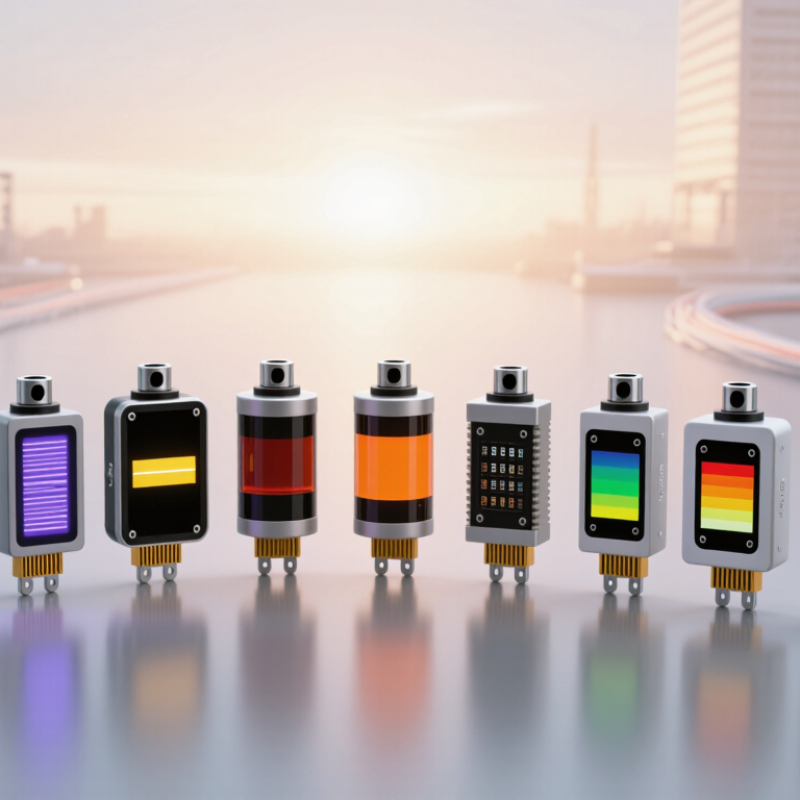
Rank by IEC 60825-1 Safety, Wavelength, Power, and Beam Quality
The top 10 laser diode types differ sharply in wavelength, output power, beam quality, and IEC 60825-1 risk. This ranking is practical, not an official IEC list. IEC 60825-1 classifies the complete product, not the bare diode. Enclosure, optics, exposure time, and accessible emission all matter.
1. Low-power red edge-emitting diodes offer visible output and simple alignment. They often provide good safety margins at low power. 2. Violet diodes produce shorter wavelengths, but retinal exposure remains serious. 3. Near-infrared VCSELs deliver compact beams with moderate power and efficient coupling. 4. Infrared single-mode diodes provide excellent beam quality, though invisible output increases handling risk. 5. Blue edge-emitting diodes offer high photon energy and strong visibility. 6. Green direct-emission diodes are useful for alignment, but thermal control can be demanding. Measure carefully.
7. Distributed-feedback diodes provide narrow spectra for optical communication. 8. High-power multimode diodes create intense beams with poorer brightness and wider divergence. 9. Pulsed laser diodes can reach high peak power while keeping average power lower. Their exposure assessment is easy to underestimate. 10. Fiber-coupled diode modules improve delivery and alignment, but the fiber output may remain hazardous. Wavelength affects the applicable limits, while power and pulse duration influence the accessible emission level. Beam quality changes how tightly energy concentrates on a surface. In practice, engineers should verify the finished device with calibrated instruments and documented measurements. A diode that appears “safe” on paper may change class after focusing optics are installed. That is the uncomfortable detail.
What Are the Top 10 Types of Driving Laser Diodes? - Rank by IEC 60825-1 Safety, Wavelength, Power, and Beam Quality
| Rank | Laser Diode Type | Typical Wavelength | Typical CW Output | Typical Beam Quality (M²) | Indicative IEC 60825-1 Class | Safety and Performance Characteristics | Common Applications |
|---|---|---|---|---|---|---|---|
| 1 | Low-Power Visible Alignment Diode | 405–660 nm | 0.5–5 mW | 1.2–2.0 | Class 2 or 3R | Visible output may activate the aversion response, but direct or magnified viewing remains hazardous. Short wavelength operation can increase photochemical retinal concerns. | Alignment tools, optical sensors, barcode systems, and laboratory indicators |
| 2 | Low-Power VCSEL | 650–980 nm | 0.5–10 mW | 1.1–1.5; near-circular output | Class 1, 2, or 3R | Compact vertical-cavity construction provides low divergence and excellent circularity. Invisible near-infrared versions do not trigger a reliable blink response. | Short-range optical sensing, distance measurement, gesture detection, and data links |
| 3 | Single-Mode Ridge-Waveguide Diode | 630–1550 nm | 5–100 mW | 1.1–1.5 | Class 2, 3R, or 3B | Offers a clean fundamental transverse mode and low beam divergence. At wavelengths above approximately 1400 nm, corneal absorption changes the dominant exposure hazard. | Precision instruments, spectroscopy, interferometry, optical measurement, and fiber coupling |
| 4 | Distributed-Feedback (DFB) Laser Diode | 1260–1650 nm | 5–100 mW | 1.1–1.5 | Class 1, 3R, or 3B | A built-in grating provides narrow linewidth and stable single-frequency operation. Near-infrared emissions can be difficult to see while still presenting an eye hazard. | Fiber-optic communications, coherent sensing, gas monitoring, and precision metrology |
| 5 | Distributed-Bragg-Reflector (DBR) Diode | 760–1650 nm | 10–200 mW | 1.2–2.0 | Class 3R or 3B | Provides wavelength selectivity and good spectral stability, often with tunability through current or temperature control. Direct viewing is unsafe at typical operating powers. | High-resolution spectroscopy, fiber sensing, lidar, and coherent optical systems |
| 6 | Multimode Fabry–Pérot Edge-Emitting Diode | 635–1060 nm | 50–500 mW | 2–10 | Class 3B | Broad gain bandwidth and multiple longitudinal modes make this design economical and robust, but its elliptical beam is less suitable for high-quality focusing. | Industrial sensors, optical storage, illumination modules, and basic fiber transmission |
| 7 | Blue-Violet GaN-Based Laser Diode | 405–460 nm | 5–500 mW | 1.2–3.0 | Class 3R or 3B | Short-wavelength visible output is readily scattered by the eye and can present significant retinal and photochemical risks. Beam shaping is commonly required. | Fluorescence excitation, optical inspection, measurement systems, and high-density optical storage |
| 8 | Quantum-Cascade Laser Diode | 3–12 µm | 10 mW–2 W | 1.5–5 | Class 3B or 4 | Mid-infrared radiation is generally invisible and may cause corneal or skin injury depending on wavelength and exposure. Thermal management is critical. | Trace-gas analysis, environmental monitoring, infrared spectroscopy, and chemical detection |
| 9 | Tapered Laser Diode and Tapered Amplifier | 760–1100 nm; selected bands near 1.3–1.6 µm | 0.5–5 W | 1.2–3.0 in the slow axis; higher in the fast axis | Class 3B or 4 | Combines a single-mode input with a flared gain section to increase power while preserving relatively good spatial quality. Interlocks and beam enclosures are normally required. | Scientific instrumentation, nonlinear optics, optical pumping, and free-space communications |
| 10 | Broad-Area High-Power Diode, Bar, or Stack | 780–1060 nm; specialized bands also available | 1 W–1 kW | Approximately 5–40, depending on emitter and stacking | Class 4 | Highest typical optical output in this comparison. Direct, reflected, and diffuse exposure can cause severe eye or skin injury and may create fire hazards. | Material processing, pumping of solid-state lasers, thermal treatment, welding, and industrial illumination |