China Top 10 Manual Ceramic Coffee Grinder Suppliers?
Choosing a dependable Manual Ceramic Coffee Grinder supplier in China requires more than comparing catalog prices. A polished product photo cannot show burr alignment, handle strength, or grinding consistency. This guide examines ten notable suppliers through practical purchasing criteria, including ceramic burr quality, adjustment control, material safety, production capacity, and export experience. It also considers sample policies, packaging protection, customization options, and communication reliability.
Details matter.
A good grinder should feel stable on a kitchen counter, turn smoothly, and produce a reasonably even grind for pour-over, French press, or travel brewing. We look for suppliers that explain their specifications clearly, provide realistic lead times, and support quality checks before shipment. Certifications and test documents should be verified, not simply copied into a product description. Pricing is useful, but it should not hide weak components or inconsistent assembly.
No supplier is perfect. Even experienced manufacturers may have limited customization, seasonal delays, or uneven sample performance. That is why this overview keeps room for careful comparison and buyer verification. Readers should request current quotations, inspect samples, confirm ceramic material details, and discuss warranty handling before placing larger orders. The selected companies are presented as potential sourcing partners, not automatic recommendations. Their strengths may fit different needs, from small retail batches to private-label coffee accessories. Performance can change over time, so direct communication remains essential.
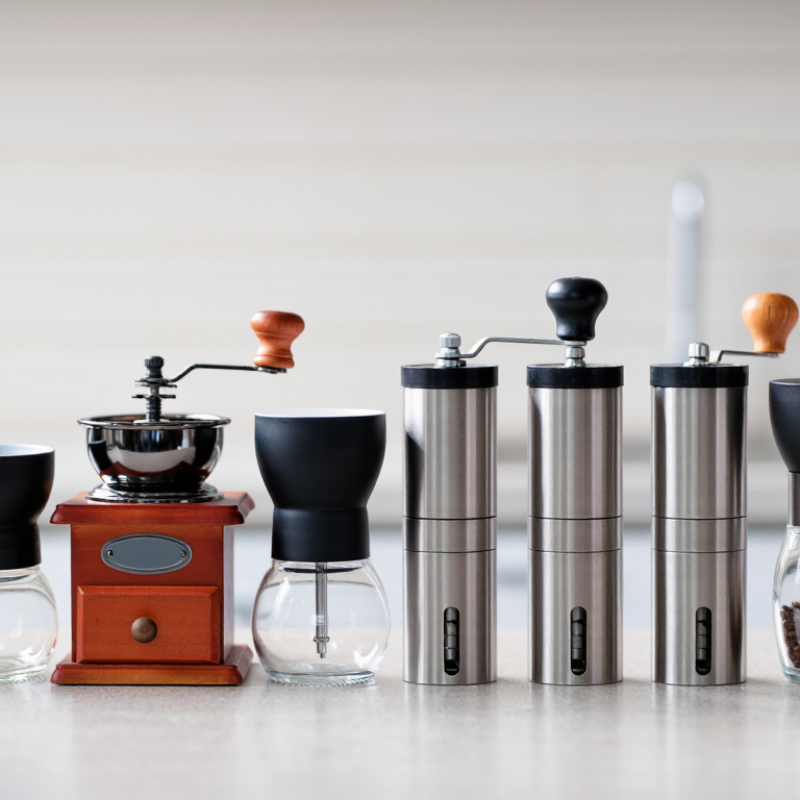
What Defines a High-Quality Manual Ceramic Coffee Grinder Supplier in China
What Defines a High-Quality Manual Ceramic Coffee Grinder Supplier in China
A reliable supplier should demonstrate more than attractive product photos. The ceramic burr must grind evenly, resist corrosion, and maintain stable alignment during repeated use. Ask for material specifications, burr hardness data, and sample testing records. Experienced suppliers can explain particle consistency, handle strength, adjustment systems, and food-contact safety clearly. Their answers should sound practical, not rehearsed.
Factory transparency matters. Request production images, quality-control procedures, and batch inspection records. A dependable manufacturer should identify the ceramic source, metal grades, packaging process, and replacement-part options. Clear communication about minimum order quantities and lead times also reveals operational discipline. One overlooked detail can be costly. For example, a loose shaft may produce uneven grounds after only a few weeks. Supplier evaluation should include real grinding tests, not only laboratory claims.
Tips: Order several samples from different batches. Test coarse, medium, and fine settings with the same beans. Check wobble, noise, residue, and cleaning effort. Ask whether the supplier accepts reasonable design changes. Do not treat the cheapest quotation as the best value. I would also document every agreed specification, because informal promises can become unclear later. Even careful buyers sometimes miss the user experience: a grinder may perform well, yet feel uncomfortable during daily rotation.
Top 10 Chinese Suppliers of Manual Ceramic Coffee Grinders
China’s manual ceramic coffee grinder sector serves a growing global coffee market. The International Coffee Organization’s 2023/24 report estimated worldwide coffee consumption at about 177.9 million 60-kilogram bags. This demand encourages more Chinese manufacturers to develop compact, hand-operated grinding equipment.
A practical review of the top 10 Chinese suppliers should examine more than catalog photos. Check ceramic burr hardness, shaft alignment, grind adjustment, and handle strength. Ask for samples. Measure particle consistency across coarse, medium, and fine settings. Request food-contact material declarations, factory audit records, and batch inspection reports. ISO 9001 certification can support process reliability, but it does not guarantee excellent grinding performance. Test independently.
Export experience also matters. Review packaging quality, spare-part availability, lead times, and communication during sample revisions. Supplier directories may show large production figures, yet those numbers require verification through transaction records or factory visits. This is where many rankings become too neat. A smaller workshop may offer better burr calibration, while a larger factory may provide steadier capacity. The right choice depends on target price, order volume, customization needs, and market requirements. Trade data from China’s customs system can help compare relevant coffee and kitchenware export categories, although ceramic grinders are not always recorded under one precise code.
Key Products, Manufacturing Strengths, and Customization Options
China’s leading manual ceramic coffee grinder suppliers usually focus on ceramic burr sets, stainless steel shafts, glass or food-grade plastic containers, and compact travel bodies.
Ceramic burrs resist rust and produce less heat during slow grinding. A reliable supplier should explain burr hardness, adjustment range, and particle consistency. It should also provide material records and batch inspection reports. Small details matter. A loose shaft can create uneven grounds within weeks.
Manufacturing strength appears in tooling, assembly control, and repeat production.
Experienced factories use calibrated gauges to check burr alignment, handle fit, and thread accuracy. They often test grinding performance with several roast levels before shipment. Sample orders are useful here. They reveal noise, powder retention, and cleaning difficulty better than catalog images. Some factories still depend too heavily on manual inspection. That weakness deserves attention.
Customization may include logo engraving, handle shapes, hopper colors, packaging inserts, and gift-box dimensions.
More advanced suppliers can adjust burr geometry, body texture, grind markers, and container capacity. Clear drawings and approved samples help prevent costly misunderstandings. Buyers should confirm minimum order quantities, mold fees, lead times, and replacement-part support. Food-contact materials also require suitable documentation for the target market. A supplier may promise full customization, yet offer limited engineering support. Ask for test samples, production photos, and measurable quality standards before committing. There is no perfect factory. Supplier selection still needs careful judgment.
How to Compare Quality, Pricing, Certifications, and Minimum Orders
When comparing the top manual ceramic coffee grinder suppliers, start with measurable quality, not catalog photos. The International Coffee Organization reported global coffee consumption of about 177 million 60-kilogram bags in 2022/23, increasing pressure on consistent home-brewing equipment. Request ceramic burr hardness data, shaft material, bearing structure, and grind-size repeatability. A useful factory test includes at least 100 adjustment cycles and repeated grinding of 20 grams of coffee. Check whether the ceramic burr remains aligned under pressure. Small details matter.
Pricing should include tooling, packaging, inspection, freight, and replacement parts. A factory quote below 8 US dollars may become 12 dollars after custom packaging and shipping. Treat that figure as a working benchmark, not a market rule. Public food-contact requirements, including EU Regulation (EC) No 1935/2004 and relevant FDA rules, can guide ceramic and coating documentation. Ask for current laboratory reports, material declarations, and ISO 9001 records. Certification logos alone prove little.
Minimum orders often range from 300 to 3,000 units, depending on customization and mold investment. Ask for separate prices at 300, 1,000, and 5,000 units. Confirm sample fees, lead times, defect handling, and spare-burr availability in writing. I would not trust a perfect sample alone. Production can drift. An independent pre-shipment inspection, using a defined defect limit, provides stronger evidence. Supplier evaluations should also compare grinding performance, not only unit price.
Tips for Selecting the Right Chinese Coffee Grinder Supplier
China’s manual ceramic coffee grinder suppliers serve a growing coffee market. The International Coffee Organization estimated global coffee consumption at 177.9 million 60-kilogram bags in 2023/24. That demand makes supplier selection more important, especially for small retailers and private-label buyers.
Start with the burr, not the catalog photograph. Ask for ceramic hardness data, shaft alignment tolerances, and particle-size test results. A reliable factory should provide samples from different production batches. Test them with the same beans and brewing method. Check grind consistency, adjustment accuracy, handle wobble, and powder retention. Small details matter. A grinder that feels smooth for one week may develop loose settings later.
Review the supplier’s quality system and production records. ISO 9001 certification can indicate process discipline, but it cannot replace physical inspection. Request food-contact material declarations, packaging specifications, and inspection reports. Confirm the ceramic burr’s origin and coating process. Also examine mold maintenance, assembly training, and defect-handling procedures. The International Trade Centre emphasizes supplier verification and quality control as practical steps in international sourcing. Do not rely only on a low quotation. Freight damage, replacement parts, and inconsistent batches can erase the savings. My own preference is a supplier that accepts a written sample standard, even when its price is slightly higher. I still question every sample, because one good unit proves very little.