- 713.590.1312
- sale@pandbtools.com
Top Quartz Rods Manufacturers for Global Buyers
Quartz Rods are becoming essential components in semiconductor, laboratory, lighting, and optical manufacturing. Their value depends on more than appearance. Purity, dimensional stability, thermal resistance, and surface finish can determine whether a rod survives repeated heating near 1,200°C.
Market evidence supports this growing importance. SEMI’s World Fab Forecast continues to report major global investment in semiconductor fabrication capacity. That expansion increases demand for reliable quartz glass components. Grand View Research also identifies fused silica as a growing specialty-materials market, supported by semiconductor and optical applications. However, these reports usually cover fused silica broadly, not Quartz Rods alone. That limitation deserves attention.
Dr. John C. Mauro, a recognized glass-science researcher, has emphasized that “glass is a material whose properties depend strongly on its processing history.” Buyers should remember this point. Two rods may look identical under warehouse lighting, yet perform differently inside a furnace tube or plasma environment. Manufacturing records matter.
This guide examines leading Quartz Rods manufacturers for global buyers. It considers raw-material purity, manufacturing controls, tolerances, inspection methods, customization, export experience, and technical support. Supplier claims still require verification. Certificates can be incomplete, and published specifications may hide important testing conditions. A practical buyer should request sample rods, dimensional reports, impurity data, and thermal-shock results before approving larger orders. The strongest manufacturers combine repeatable production with transparent documentation. Not every famous supplier does.
Quartz Rods: Structure, Properties, and Common Applications
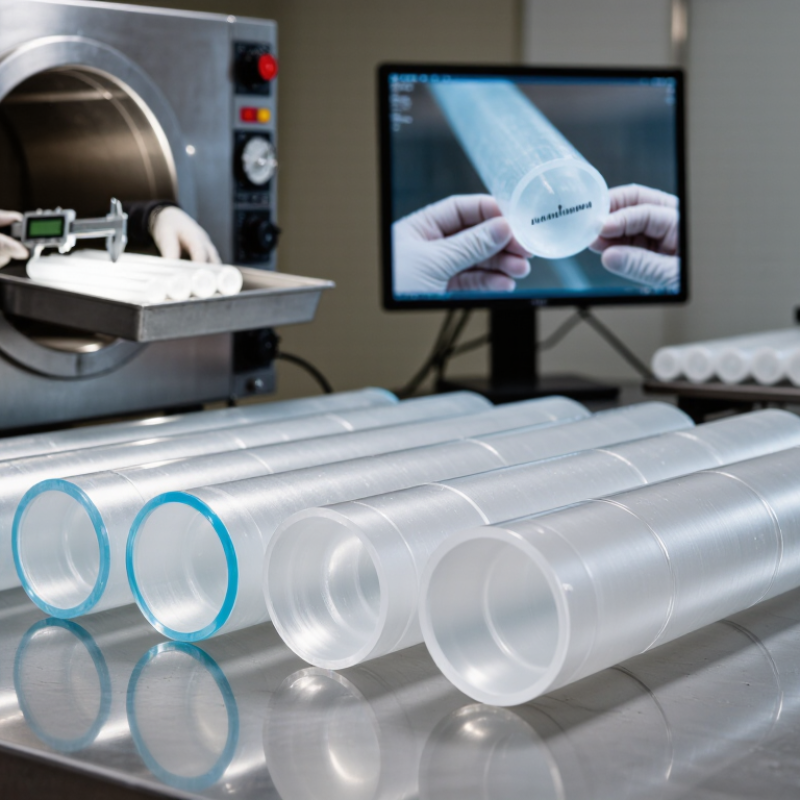
Quartz rods are made from high-purity silicon dioxide, commonly called fused quartz or fused silica. Their structure is mainly amorphous, not crystalline like many ordinary glass products. This structure gives quartz rods excellent thermal stability and low expansion. They can resist sudden temperature changes better than common glass.
In practical use, a quartz rod feels rigid but remains vulnerable to scratches and sharp mechanical impacts. Its high softening temperature supports heating tools, furnace components, laboratory tubes, and ultraviolet lighting systems. Quartz also offers strong electrical insulation and good chemical resistance. However, performance depends on purity, hydroxyl content, diameter, and surface finish. A rod for semiconductor processing needs tighter controls than one used in a basic laboratory fixture.
Global buyers should examine dimensional tolerances, straightness, edge treatment, and packaging methods. Clean wrapping matters because small particles can affect sensitive processes. Ask for inspection records and material data before placing large orders. Some suppliers describe quartz as universally durable, but that wording needs caution. Repeated thermal cycling, alkaline exposure, or poor handling may still cause failure. I have found that clear drawings often prevent more problems than attractive product descriptions. The specification is sometimes incomplete. That deserves review.
Key Criteria for Evaluating Quartz Rod Manufacturers
A reliable quartz rod manufacturer should provide measurable evidence, not attractive promises. Request inspection reports showing purity, hydroxyl content, diameter tolerance, and surface quality. Ask for evidence. Details matter.
Experienced producers explain how they control melting, forming, annealing, and machining. Their technical team should discuss thermal shock, light transmission, and operating temperature limits clearly. Confirm whether each batch receives dimensional inspection. Useful records include sampling methods, test equipment, calibration dates, and corrective-action reports. A clean production area also reveals practical discipline.
Product consistency matters more than one impressive sample. Compare several batches for straightness, end finish, bubbles, inclusions, and visible stress. Packaging deserves attention too. Protective sleeves, moisture control, and strong export cartons can prevent damage during long transport. Traceable labels should connect every rod to its production lot.
Communication is another serious criterion. A dependable supplier answers technical questions directly and admits limitations. No supplier is perfect. I would question any manufacturer claiming zero variation across every order. Review lead times, minimum quantities, replacement procedures, and documentation before signing a contract. Independent testing may be worthwhile for demanding applications, although it adds cost and time. That trade-off is easy to underestimate. Availability alone should never replace technical verification.
Leading Quartz Rod Manufacturers for Global Buyers
Leading quartz rod manufacturers support demanding applications in laboratories, lighting, semiconductors, and industrial heating. Their products should offer high purity, stable dimensions, and resistance to thermal shock. A reliable supplier explains raw material grades, forming methods, surface finishes, and inspection procedures. Buyers should also request tolerance data, test reports, and export packaging details. A polished catalog is not proof of consistent production.
Tips: Ask for a sample before placing a large order. Check diameter, straightness, clarity, and surface defects under strong light. Confirm whether the rod is fused quartz or another glass type. Review production capacity, lead time, and replacement terms in writing. Small details matter.
Experienced manufacturers usually provide clear drawings and practical recommendations for cutting, drilling, or heating. They may also suggest a suitable grade for ultraviolet transmission or high-temperature use. However, technical advice should match documented test results. I would not rely on a low price alone. It may hide unstable tolerances or weak packaging. Even strong suppliers can make mistakes, so define acceptance standards before production. A careful buyer compares samples, communication quality, and after-sales response, not only the product page.
Manufacturing Standards, Customization, and Quality Control
Top Quartz Rods Manufacturers for Global Buyers
Reliable quartz rod sourcing starts with manufacturing discipline. High-purity fused quartz should be inspected for bubbles, striae, inclusions, surface cracks, and dimensional variation. ISO 9001 supports controlled processes, but certification alone proves little.
ISO’s 2022 Survey recorded about 1.26 million ISO 9001 certificates worldwide.
The number is impressive. It is not a quality guarantee.
Manufacturers should provide batch records, raw-material traceability, and inspection data for every shipment. Useful measurements include diameter tolerance, length, hydroxyl content, optical clarity, and thermal resistance. Independent laboratories working under ISO/IEC 17025 can strengthen test credibility.
Semiconductor capacity remains a major demand driver. A 2024 SEMI forecast expected global semiconductor manufacturing capacity to grow by roughly 6% that year. That growth increases pressure on quartz suppliers to maintain stable purity and repeatable geometry.
Customization must be practical, not decorative. Buyers may request cut lengths, polished ends, drilled holes, tapered tips, or special packaging. Confirm drawings before production. Ask how tools are cleaned and how contamination is prevented.
Tips:
Request a sample lot, not one piece. Compare three batch reports. Check packaging after transit.
A supplier may meet a drawing yet miss the application’s thermal cycle. That is where purchasing reviews often fail. Even experienced teams should question their assumptions. No supplier gets every batch perfect.
Export Services, Pricing Factors, and Buyer Considerations
Top Quartz Rods Manufacturers for Global Buyers
Export Services, Pricing Factors, and Buyer Considerations
Reliable quartz rod manufacturers support international buyers with more than product availability. They provide material certificates, dimensional records, packing details, and export documents. Ask for the quartz grade, diameter tolerance, length range, and hydroxyl content before requesting a formal quotation. Clear specifications reduce disputes during production and customs clearance.
Pricing depends on raw material purity, rod dimensions, processing methods, order quantity, and inspection requirements. A large-diameter rod usually costs more because production control becomes harder. Special grinding, polishing, or tight tolerances also increase labor and equipment costs. Freight matters too. Wooden crates, protective sleeves, insurance, and destination handling can change the final landed price.
Request a sample when the application is sensitive. Check surface scratches, bubbles, cracks, and end-face quality under consistent lighting. Compare several suppliers using the same specification sheet. Otherwise, price comparisons become misleading. Export experience is useful, but it does not replace technical verification. Review payment terms, lead time, replacement procedures, and communication records carefully.
The cheapest offer may hide weak packaging or unclear tolerances. I would not call it a saving yet. A stronger evaluation combines test data, production capability, delivery history, and responsive after-sales support. No checklist is perfect. Buyers should revisit their assumptions after receiving the first shipment.
| Supplier Category | Typical Product Range | Common Material Grade | Typical Dimensional Capability | Export Services | Indicative Lead Time | Main Pricing Factors | Key Buyer Considerations |
|---|---|---|---|---|---|---|---|
| Standard fused quartz rod supplier | Solid rods for laboratory tools, heating elements, sight glasses, and general industrial use | High-purity fused silica, commonly 99.9% SiO₂ or higher | Typical diameters from approximately 2 mm to 100 mm; standard and cut-to-length options are commonly available | Commercial invoice, packing list, export packaging, and support with standard international shipping documentation | Usually 2–6 weeks, depending on stock, diameter, quantity, and finishing requirements | Rod diameter, length, purity, surface finish, quantity, cutting waste, packaging, freight, and destination | Confirm straightness, visible-bubble limits, surface quality, dimensional tolerance, and inspection method before ordering |
| High-purity quartz rod supplier | Rods for semiconductor, photovoltaic, analytical, and high-temperature applications | High-purity fused silica, often specified at 99.99% SiO₂ or above; trace-element limits may also be required | Precision-cut rods with controlled diameter, length, concentricity, and surface condition | Material certificates, lot traceability, certificate of conformance, export packing, and customized documentation when agreed in advance | Usually 4–10 weeks because of additional inspection, cleaning, and traceability requirements | Purity level, metallic contamination limits, cleaning process, dimensional tolerances, yield rate, inspection scope, and order volume | Request trace-element data, particle-control procedures, packaging cleanliness, and sample approval before mass production |
| Laboratory-grade quartz rod supplier | Stirring rods, combustion accessories, furnace components, laboratory fixtures, and custom glassware parts | Fused quartz or fused silica selected for thermal stability and chemical resistance | Small and medium diameters with polished, fire-polished, rounded, or beveled ends | Small-batch ordering, protective packaging, sample shipments, and courier or air-freight coordination | Approximately 1–4 weeks for standard sizes; longer for formed or machined parts | End finishing, polishing grade, cut length, minimum order quantity, packaging protection, and shipping method | Check chemical compatibility, thermal-shock resistance, edge condition, cleanliness, and breakage replacement terms |
| Industrial heating-element rod supplier | Quartz support rods and components used in furnaces, ovens, lamps, and thermal-processing equipment | Fused quartz designed for repeated exposure to elevated temperatures | Longer lengths and larger diameters may be available; straightness and end geometry are important for installation | Export cartons with separators, moisture-resistant inner packing, loading photos, and freight coordination | Typically 3–8 weeks, depending on length, quantity, forming, and machining | Length, diameter, bending or forming requirements, drilling, end treatment, packaging, and transport risk | Verify operating temperature, thermal cycling conditions, mounting method, allowable deflection, and replacement compatibility |
| Custom-machined quartz rod supplier | Drilled, slotted, grooved, tapered, threaded, or otherwise machined quartz components | Fused quartz selected according to purity, temperature, and chemical-service requirements | Capability depends on drawing complexity; critical dimensions should be defined with tolerances and inspection points | Engineering review, drawing confirmation, prototype production, dimensional inspection, and customized export packaging | Commonly 5–12 weeks, including drawing approval, tooling, prototypes, and final inspection | Machining complexity, material utilization, tolerance, tooling, inspection, prototype quantity, and rejection risk | Provide a 2D drawing or 3D model, define datum references, specify tolerances, and approve a pre-production sample |
| Optical-quality quartz rod supplier | Rods for optical, ultraviolet, lamp, sensor, and specialized photonics applications | Optical-grade fused silica with controlled absorption and internal-defect requirements | Diameter, cylindricity, surface roughness, homogeneity, and internal inclusion limits may be specified individually | Inspection reports, protective tube packaging, moisture and contamination control, and shipment insurance options | Approximately 6–14 weeks for customized optical specifications | Optical transmission range, hydroxyl content, homogeneity, surface finish, defect class, tolerances, and inspection equipment | Specify wavelength range, transmission target, surface quality, laser-damage requirements, and acceptance criteria |
| Small-quantity sample supplier | Samples for testing, prototyping, equipment maintenance, and qualification programs | Usually standard fused quartz; the exact purity and grade should be confirmed on the quotation | Standard stock sizes or short cut lengths may be available with less customization | Courier delivery, sample labeling, basic product documentation, and commercial invoice support | Approximately 3–15 business days when material is in stock | Small-order handling, cutting, courier charges, protective packaging, and documentation | Use samples to verify fit, thermal behavior, transparency, surface condition, and supplier consistency before bulk purchase |
| Bulk-order export supplier | Regular production quantities for distributors, equipment builders, laboratories, and industrial users | Grade selected according to application, purity requirements, and approved technical specification | Standardized dimensions are generally more cost-effective than many custom sizes | Container or pallet loading, export cartons, palletization, batch labeling, shipping documents, and agreed Incoterms such as FOB or CIF | Usually 4–12 weeks, depending on production capacity, order size, and shipping schedule | Volume, repeat-order stability, standardization, yield, payment terms, Incoterms, freight, insurance, and destination duties | Compare total landed cost rather than unit price alone; define quality consistency, replenishment schedule, and claims procedure |
| Buyer evaluation benchmark | Comparison framework for selecting a suitable quartz rod manufacturing partner | Confirm SiO₂ purity, hydroxyl content, trace metals, thermal properties, and application-specific grade | Evaluate diameter, length, straightness, concentricity, surface roughness, end finish, and tolerance capability | Assess document accuracy, packaging design, export experience, response time, and ability to support the selected Incoterm | Compare quoted lead time with sample approval, production, inspection, and transit stages separately | Review material, processing, inspection, packaging, freight, customs, taxes, breakage allowance, and after-sales costs | Prioritize verified specifications, production samples, measurable acceptance criteria, supply continuity, and transparent communication |