How to Choose a Metal Polishing Machine?
Choosing a Metal Polishing Machine is not simply a matter of selecting the fastest motor or largest abrasive wheel. The correct choice depends on metal type, part geometry, surface roughness, production volume, and the required final appearance. A stainless-steel handrail needs a different process from an aluminum automotive housing. Edges, corners, and narrow grooves can expose weaknesses quickly.
Industry data shows why this decision deserves careful evaluation. Grand View Research estimates that the global metal finishing market reached approximately USD 102.3 billion in 2023, with continued growth expected through 2030. MarketsandMarkets also identifies automation, consistent surface quality, and lower labor dependence as major finishing trends. However, these reports use different market definitions. Their figures should guide research, not replace testing.
Dr. David A. Dornfeld, a respected manufacturing researcher, emphasized a useful principle: “Quality must be designed into the process, not inspected in afterward.” That idea applies directly to a Metal Polishing Machine. A reliable machine should deliver stable pressure, controlled speed, repeatable contact, and measurable roughness. Speed alone is not enough. Consider vibration, dust extraction, abrasive replacement, operator access, and maintenance time. A machine may look impressive on a showroom floor yet perform poorly on delicate parts. Small trials matter. Request sample polishing, inspect the surface under suitable lighting, and compare results against your actual tolerances. The uncomfortable truth is that no single machine suits every workshop. Some purchasing decisions still rely too heavily on catalogue promises. That deserves reconsideration.
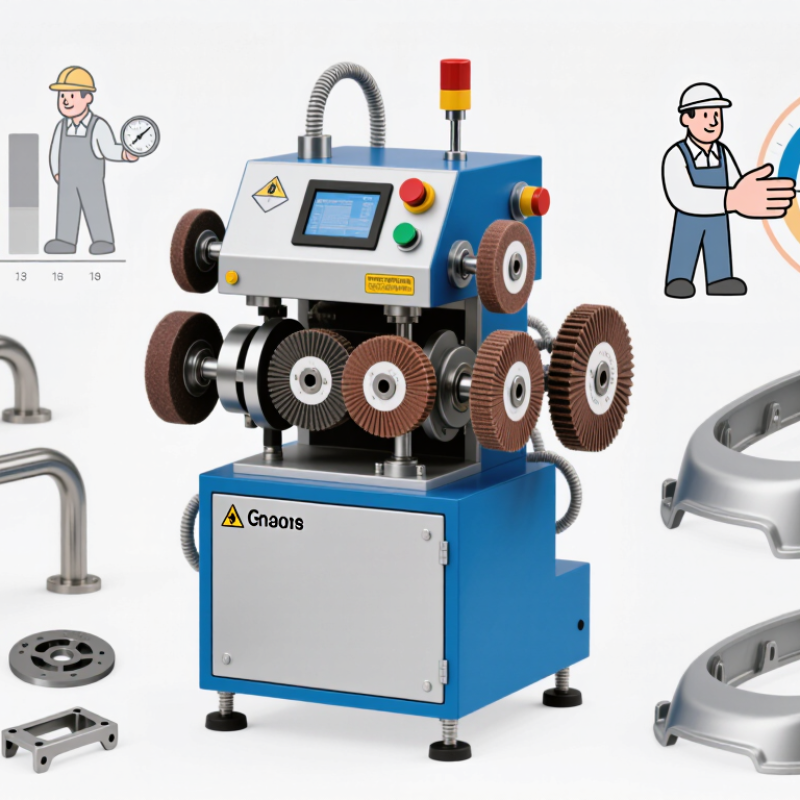
Define Your Metal Polishing Requirements
Choosing a metal polishing machine starts with defining the work, not comparing machine sizes. List the metals, part dimensions, batch volume, and required finish. Stainless steel alone reached 58.4 million tonnes of global production in 2023, according to the International Stainless Steel Forum’s 2024 statistics. That scale reflects varied applications, from brushed panels to mirror-finished fittings. Your machine must match your actual surface and workload.
Specify the target roughness using Ra or another agreed parameter. ISO 21920-1:2021 provides current guidance for profile surface-texture measurement. Do not rely on phrases like “high shine.” Ask for a measurable value, inspection method, and lighting condition. A test piece is essential. It may reveal that the selected abrasive removes too much material or leaves directional marks.
Measure production pressure honestly. Record pieces per hour, changeover time, operator contact, and dust-collection needs. The U.S. Department of Energy notes that compressed air can represent more than 10% of industrial electricity use in some facilities, so pneumatic equipment deserves a realistic energy review. Check motor power, belt width, abrasive consumption, noise, and maintenance access. Include awkward parts.
A neat specification can still be wrong. Small trials prevent expensive assumptions.
Compare Metal Polishing Machine Types and Processes
How to Choose a Metal Polishing Machine?
Choosing a polishing machine starts with the required surface, not the machine’s advertised speed. Belt polishing machines remove weld marks quickly and suit flat stainless-steel parts. Rotary buffing machines create brighter finishes on curved components. Vibratory systems process many small parts together, but they need longer cycle times. CNC or robotic polishers offer repeatable pressure and tool paths. They cost more, yet reduce variation in larger production runs.
Grand View Research reported that the global metal finishing market exceeded USD 100 billion in 2023. This growth reflects rising demand for consistent surface quality. The U.S. Department of Energy also reports that motor-driven systems can consume over half of industrial electricity. Therefore, compare motor efficiency, idle power, extraction needs, and abrasive life.
A faster machine may waste more energy. That detail is easy to miss. Surface roughness should be measured with a profilometer, not judged only by reflected light. ISO 21920 provides current guidance for profile surface-texture measurement, helping buyers compare process results more reliably.
Tips:
Test the actual alloy and geometry before purchase. Record starting roughness, cycle time, abrasive consumption, and final Ra value. For aluminum, use controlled pressure because heat can smear the surface. For stainless steel, separate abrasives from carbon-steel work areas. Ask operators about loading comfort and visibility. Their feedback often reveals problems that brochures ignore. A mirror finish is not always better; it may increase cost without improving performance. My own selection rule is useful, but not perfect. Real samples must decide.
Match Machine Specifications to Your Workpieces
How to Choose a Metal Polishing Machine?
Match Machine Specifications to Your Workpieces
Choosing a polishing machine starts with the workpiece, not the advertised power. Measure its length, width, weight, and surface shape. A narrow spindle may suit small fittings, but large panels need wider contact areas and steadier support. Check the machine’s working clearance carefully. A piece can fit on the table yet strike the housing during rotation.
Match motor power and speed to the metal and finish required. Stainless steel often needs controlled speed and consistent pressure to prevent heat discoloration. Softer aluminum may require gentler abrasives and lower pressure. Higher speed is not always better. It can create swirl marks, rounded edges, or excessive heat. Variable-speed control gives operators more room to adjust. That matters during final finishing.
Consider the abrasive system, shaft size, fixture design, and dust collection together. Test the machine with an actual sample, especially when the surface has grooves or tight corners. Observe vibration, noise, temperature, and polishing time. A stable machine should not make the workpiece jump under moderate pressure. Safety guards and emergency controls also deserve close inspection. I would not rely on a specification sheet alone. Real workshop conditions expose weaknesses that photographs cannot show. Recheck the choice after several workpieces, because the first trial may hide operator fatigue or uneven compound use.
Evaluate Automation, Safety, Maintenance, and Usability
How to Choose a Metal Polishing Machine?
Evaluate Automation, Safety, Maintenance, and Usability
Automation should match your production rhythm, not simply look impressive. A programmable machine can repeat pressure, speed, and polishing time accurately. This reduces operator variation across stainless steel panels or aluminum fittings. However, full automation may be excessive for small batches. Manual adjustment can sometimes provide better control for unusual shapes.
Safety deserves a physical inspection. Look for enclosed moving parts, clear guards, emergency stops, and reliable interlocks. Dust extraction is also important because polishing can release fine particles into the workspace. Ask whether operators can see the polishing area without reaching near the wheel. A short trial run often reveals hazards that brochures miss.
Maintenance affects long-term output. Choose a machine with accessible belts, bearings, filters, and polishing compounds. Review the service schedule and confirm that replacement parts are realistically available. Controls should be readable, and routine adjustments should not require advanced programming skills. In practical evaluations, operators often value simple cleaning more than extra software features. That detail is easy to overlook.
Do not ignore training. A machine may be technically safe but confusing during a busy shift. Test its noise, vibration, setup time, and recovery after an emergency stop. Record these observations before purchase. Some judgments may change after several weeks of use. That is normal. Reliable equipment supports consistent results while leaving room for careful human decisions.
How to Choose a Metal Polishing Machine?
Recommended evaluation weighting for comparing metal polishing machines across key purchasing criteria.
Safety and automation receive the highest priority because they directly influence operator protection, production consistency, and labor requirements. Maintenance, usability, and finish consistency should also be evaluated according to the material, workload, and required surface quality.
Calculate Costs and Select the Right Machine
Choosing a metal polishing machine should begin with cost, not appearance. Define the required finish, part size, material, and daily production volume. A small batch of stainless steel fittings needs different equipment from large aluminum panels. Record the target cycle time. Measure it on your current process if possible.
Calculate the purchase price, installation, abrasives, electricity, labor, cleaning, and maintenance. A simple estimate is cost per part: total monthly operating cost divided by finished parts. Include rejected parts and setup time. My early estimates were too neat. Operators sometimes need extra passes, especially around corners. Leave a realistic allowance for this variation. It may change the result.
Compare machine capacity with your busiest expected shift, not today’s average. An automatic system can reduce labor, but programming and tooling may increase initial costs. A manual machine may cost less and offer flexibility for prototypes. Check spindle speed, working width, dust control, safety guards, and replacement-part availability. Ask for a sample test using your actual metal and abrasive. Inspect the surface under consistent lighting. A bright finish can hide fine scratches. Also estimate noise, floor space, ventilation, and staff training. The cheapest machine may become expensive when downtime interrupts production. Recheck every assumption with supplier data and operator feedback before purchasing.