
How to Choose the Right Knotting Unit Body?

Choosing the right Knotting unit body is a practical decision, not a catalog exercise. It affects yarn handling, knot stability, maintenance time, and machine uptime. A small mismatch can create bulky knots, uneven tension, or repeated thread breaks. These problems often appear beside the operator, under real production pressure.

The scale of the textile industry makes this choice increasingly important. Textile Exchange’s 2024 Materials Market Report estimates that global fiber production reached 124 million tonnes in 2023. The report also expects continued growth toward 2030. More output means greater pressure on reliable joining and handling equipment. ITMF’s International Textile Machinery Shipment Statistics also shows sustained investment in modern textile machinery. This trend reflects a clear need for durable, compatible components. Material strength, surface finish, geometry, and machine compatibility deserve close inspection.

In this guide, we examine how to compare a Knotting Unit Body for different yarn types and operating conditions. Practical experience matters here. A body that performs well with smooth synthetic yarn may behave differently with coarse, elastic, or recycled fibers. Check the contact surfaces. Examine the guide openings. Ask how quickly worn parts can be replaced. ISO 9001-based quality systems can support traceability, but certification alone does not guarantee field performance. That distinction is easy to overlook.

No selection is perfect. Even a careful specification can miss vibration, humidity, or operator habits. Those details deserve review before purchase. The best decision combines supplier evidence, machine data, test samples, and maintenance feedback.
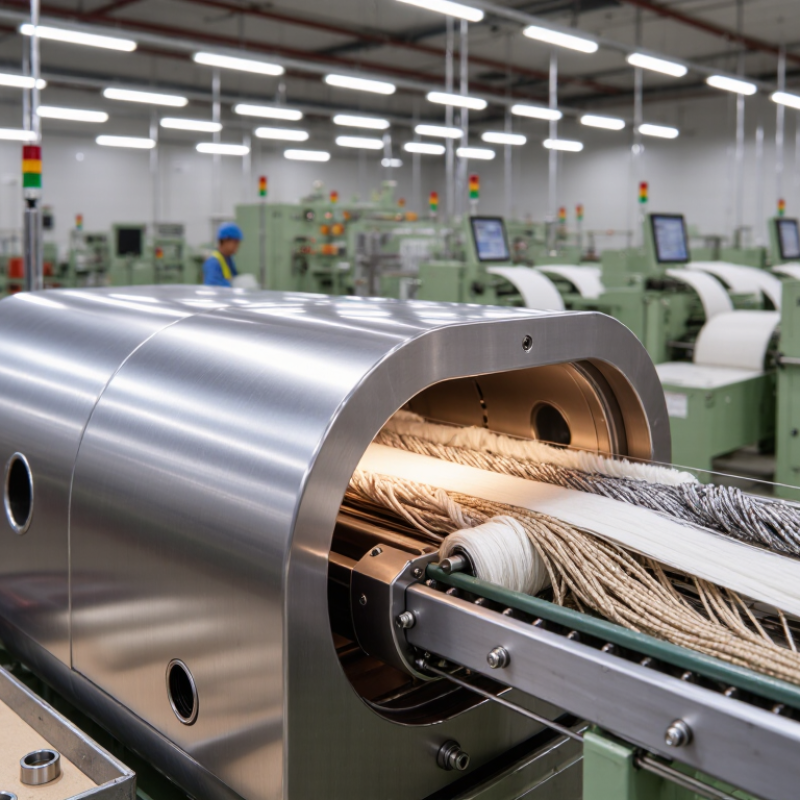
How to Choose the Right Knotting Unit Body?

Define the Role and Structure of a Knotting Unit Body

How to Choose the Right Knotting Unit Body?

Choosing the right knotting unit body starts with defining its role. It is not merely an outer cover. The body supports the knotter head, guides, clamps, drive connection, and safety shield. Its structure must keep these parts aligned during repeated cycles. Even small deformation can change thread tension and create uneven knots. A rigid frame matters.

Textile Exchange’s Materials Market Report 2024 estimates global fiber production reached 124 million tonnes in 2023. That scale increases pressure on textile equipment to reduce waste and downtime. The International Textile Manufacturers Federation’s 2024 shipment statistics also show weaker demand for several textile machine categories. Buyers may therefore seek longer service life before replacing complete equipment. Check the body’s material, wall thickness, fastening points, and access panels. Steel offers strength, while engineered alloys can reduce weight and vibration. Neither option is automatically superior. Maintenance conditions decide much more than catalog claims.

Leave room for inspection. A sealed body may look clean, but trapped lint and heat can shorten component life. Confirm that operators can reach tension parts without removing the entire housing. I would also test vibration under real production speed, not only during idle trials. That detail is often missed. Finally, compare dimensional tolerances, corrosion resistance, and replacement access with your yarn type and operating environment. A perfect design on paper can still fail beside a dusty machine.


Identify Key Materials and Manufacturing Requirements

How to Choose the Right Knotting Unit Body?

The knotting unit body supports alignment, tension control, and repeated mechanical movement. Its material directly affects service life and operating stability. Stainless steel suits humid environments and frequent cleaning. Aluminum reduces weight, but it may require protective treatment against wear and corrosion. Hardened steel offers strength around bearing seats and threaded connections. Material choice should follow load, speed, temperature, and exposure conditions, not habit.

Manufacturing requirements deserve equal attention. CNC machining can maintain accurate bores, flat mounting faces, and consistent thread positions. Tight tolerances matter around shafts and guides. However, tighter is not always better. Excessive precision can increase cost without improving performance. Surface finishing should remove sharp edges and prevent thread damage. Heat treatment may improve hardness, but distortion must be checked afterward. A body can look excellent and still fail during assembly.

Inspection should include dimensional reports, material certificates, and visual checks under strong lighting. Check bore alignment with suitable gauges. Check flatness before final assembly. In practice, small burrs often create larger problems than expected. I have seen clean-looking parts bind after several operating cycles. That assumption was wrong. A practical specification should also define cleaning methods, lubricant compatibility, replacement access, and traceability. If these details remain unclear, request sample measurements and a manufacturing drawing before approval.

Compare Body Types by Machine Compatibility and Knotting Performance

How to Choose the Right Knotting Unit Body?

A knotting unit body must match the machine, yarn path, and working space. An open-frame body offers easier access during threading and cleaning. It suits machines with visible yarn routes and frequent material changes. An enclosed body protects the knotting mechanism from lint and vibration. It works better on long production runs. Compact bodies save space, but their narrow access points can slow maintenance.

Machine compatibility comes first.

Check mounting dimensions, shaft direction, sensor position, and control signals before comparing knot quality. ITMF’s International Textile Machinery Shipment Statistics 2023 recorded more than 100,000 shuttleless looms shipped worldwide. That scale reflects a wide range of machine layouts, not one universal interface. A body designed for one loom may create poor alignment on another. Small alignment errors can increase yarn tension and create bulky knots.

Performance should be measured with real yarn.

Textile Exchange’s Materials Market Report 2024 estimated global fiber production at about 124 million tonnes in 2023. This variety makes laboratory results less decisive. Test knot strength under ISO 2062-based tensile conditions, then check cycle time, knot diameter, and broken ends. A high-speed body may look efficient. However, it can produce unstable knots with delicate yarns. I would test at least three yarn counts and two humidity levels. That extra trial costs time, but one assumption can distort the entire selection.

Evaluate Durability, Maintenance, and Replacement Needs

How to Choose the Right Knotting Unit Body?

A knotting unit body works under repeated tension, vibration, dust, and sudden thread loads. Its durability depends on material quality, machining accuracy, and stable alignment. In my maintenance experience, small surface marks often become larger failures after weeks of production. Check the body for rigid construction, smooth mounting faces, and protected bearing areas. A strong body should resist distortion during continuous operation, not only during a bench inspection.

Maintenance needs should influence the choice as much as initial strength. Look for accessible fasteners, clear lubrication points, and replaceable wear components. A body requiring extensive disassembly can increase downtime and invite assembly errors. Keep a simple inspection record. Note unusual noise, heat, looseness, and changes in knot consistency. I once underestimated dust buildup around a housing. The repair was avoidable. That mistake still shapes my checklist.

Tips: Compare expected service life with your operating schedule. Confirm replacement bodies and critical parts remain available. Ask a qualified supplier for dimensional tolerances, material details, and maintenance guidance. Keep one spare when downtime is costly and storage conditions are controlled. Replacement is sensible when cracks, warped surfaces, repeated misalignment, or unexplained knot failures appear. However, poor knotting may come from thread quality or timing. Inspect the whole system before ordering parts.

How to Choose the Right Knotting Unit Body? – Evaluate Durability, Maintenance, and Replacement Needs

Knotting Unit Body Option Typical Body Material Durability Characteristics Resistance to Wear and Corrosion Recommended Maintenance Interval Typical Replacement Consideration Best Application Conditions
Standard cast iron body Gray cast iron with machined mounting surfaces Rigid and stable under normal operating loads; relatively brittle if exposed to impact or severe vibration Good resistance to compressive loading; exposed surfaces may rust when moisture and inadequate protection are present Clean and inspect weekly; check mounting bolts, cracks, and alignment monthly Replace when cracks, distorted mounting surfaces, excessive thread damage, or permanent misalignment is found General-purpose installations with controlled vibration and moderate environmental exposure
Ductile iron body Ductile iron with machined functional surfaces Higher toughness and impact resistance than gray cast iron; suitable for heavier operating loads Good structural durability; still requires surface protection in wet or chemically aggressive environments Inspect weekly; lubricate associated moving parts according to the equipment service schedule; verify alignment monthly Replace after impact damage, fatigue cracking, irreparable bore wear, or loss of dimensional accuracy High-cycle production where shock loads or frequent starts and stops may occur
Carbon steel fabricated body Welded carbon-steel plate or bar construction Strong and repairable; weld quality, stress relief, and fabrication accuracy strongly affect service performance Good mechanical strength; requires paint, coating, or other corrosion-control measures in humid conditions Remove debris weekly; inspect welds and coating monthly; perform a detailed structural inspection every 6–12 months Repair may be possible for localized damage; replace when weld cracks, buckling, severe corrosion, or dimensional distortion affects alignment Heavy-duty equipment requiring a robust body with accessible repair options
Stainless steel body Machined or fabricated stainless steel, commonly selected for corrosion-sensitive service Good structural reliability when correctly designed; material grade and fabrication quality determine actual performance High resistance to atmospheric moisture and many cleaning environments; not immune to pitting, crevice corrosion, or chemical attack Rinse and dry after exposure to salts or chemicals; inspect contact surfaces and fasteners monthly Replace when corrosion causes pitting, wall loss, distortion, or loss of a precision mounting or bearing surface Washdown areas, humid facilities, and applications where corrosion control is more important than minimum cost
Aluminum alloy body Machined or cast aluminum alloy Lightweight and easy to handle; lower stiffness and surface hardness than iron or steel require careful load evaluation Good atmospheric corrosion resistance when suitable alloy and surface treatment are used; vulnerable to galvanic corrosion with dissimilar metals Inspect contact points and fasteners monthly; check for fretting, thread wear, and galvanic corrosion Replace when mounting holes elongate, threads strip, cracks develop, or deformation affects knotting alignment Mobile machinery, weight-sensitive equipment, and moderate-load applications with limited impact
Polymer-composite protective body Fiber-reinforced polymer or engineering plastic with metal inserts where required Low weight and good chemical resistance; temperature limits, impact resistance, and long-term creep must be verified Does not rust; may degrade through ultraviolet exposure, solvents, abrasion, or elevated temperature Clean with compatible agents monthly; inspect for cracks, swelling, discoloration, and loose inserts Replace when cracking, softening, delamination, ultraviolet embrittlement, or insert movement is visible Corrosive or electrically sensitive environments with low-to-moderate mechanical loads
Selection guideline: Choose the body material according to load, vibration, moisture, chemical exposure, operating temperature, required alignment accuracy, and the availability of replacement or repair services. Always follow the equipment manufacturer’s inspection limits and service instructions.

Select the Right Knotting Unit Body for Your Application

Selecting the right knotting unit body starts with the material passing through it. Check the thread, rope, or wire diameter first. A body designed for fine thread may struggle with thick, stiff material. Measure the working diameter under tension, not only on a loose sample.

Look closely at the operating conditions. A dusty workshop needs sealed surfaces and easy cleaning access. A humid area may require corrosion-resistant construction. For continuous production, choose a rigid body that controls vibration during repeated cycles. I have seen small alignment errors create uneven knots and premature wear. It was not always the knotting mechanism; sometimes the body had been mounted on a flexible frame.

Fit and maintenance deserve equal attention. Confirm the mounting holes, shaft position, clearance, and connection points before ordering. Leave enough space for tools and inspection. A compact body can save room, but cramped access slows every adjustment. Check whether worn guides, bearings, or tension parts can be replaced without removing the complete unit. That detail is easy to overlook. It can become expensive later.

Ask for verified dimensional drawings, load information, and operating limits. Test the unit with your actual material when possible. Short trials reveal slipping, heat, noise, and inconsistent knot formation. Do not select by price alone. The cheapest body may demand more setup time and frequent correction. Reliable selection comes from matching the body to the application, installation, and maintenance habits.

REQUEST A QUOTE

Menu
[all-fields]