How to Choose the Right Air Heat Exchanger?
Choosing the right Air Heat Exchanger is becoming an energy decision, not merely an equipment purchase. The International Energy Agency’s The Future of Cooling report projects that global space-cooling demand could triple by 2050 under current policies. That trend raises pressure on designers to recover heat, control humidity, and reduce fan power.
A suitable exchanger must match airflow, temperature difference, operating hours, and contamination risk. For example, a 2,000 m³/h system serving a humid workshop needs different protection than a clean office unit. Plate, rotary, heat-pipe, and run-around coil designs each offer different recovery efficiency, leakage control, maintenance needs, and installation limits. ASHRAE guidance emphasizes reviewing sensible and latent loads, pressure drop, face velocity, and air quality together. Ignoring one variable can weaken the whole selection.
The U.S. Energy Information Administration’s Commercial Buildings Energy Consumption Survey identifies heating, cooling, and ventilation as major building energy uses. Therefore, a small pressure-drop mistake may become a substantial annual cost. A neat spreadsheet can still mislead. Real performance depends on filters, fouling, weather, controls, and commissioning quality. It is also easy to overvalue published efficiency figures, because laboratory conditions rarely match dusty filters or uneven airflow on site. A reliable choice should compare certified data, lifecycle cost, service access, noise, frost protection, and manufacturer experience. The best Air Heat Exchanger is not always the most efficient model on paper. It is the model that remains efficient, safe, and maintainable after years of daily operation.
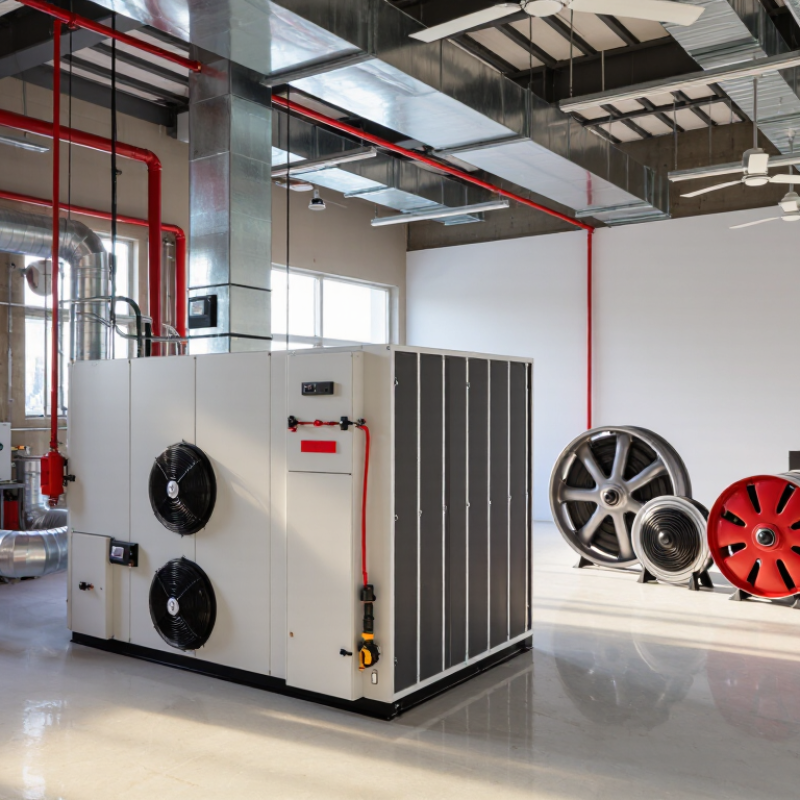
Understanding Air Heat Exchanger Types and Their Applications
How to Choose the Right Air Heat Exchanger?
Air heat exchangers transfer heat between air streams without mixing them directly. The right type depends on airflow, temperature, humidity, contamination, and available space. Plate heat exchangers use layered channels and suit offices, schools, and clean ventilation systems. They offer simple maintenance and predictable performance, but frost can reduce efficiency in cold climates.
Rotary heat exchangers use a slowly turning wheel to transfer sensible and, in some designs, latent heat. They work well in buildings requiring strong energy recovery, especially where winter air is dry. However, carryover between air streams must be assessed carefully. A run-around coil system uses separate coils connected by fluid piping. It fits buildings with distant air-handling units and provides good separation between exhaust and supply air. The piping adds cost and may increase pump energy.
Heat pipes are compact and useful where airflow paths sit close together. They have no moving parts, but their performance depends strongly on installation orientation and temperature differences. Application details matter more than catalogue efficiency. Check the actual airflow rate, pressure drop, cleaning access, and filter condition. Dusty workshops need inspection doors and corrosion-resistant materials. Kitchens require careful grease control. Hospitals need strict leakage management.
Field measurements often expose assumptions. A system rated for 10,000 cubic meters per hour may perform poorly with blocked filters or unbalanced fans. I would review seasonal data before choosing equipment. Real sites are rarely tidy. A small efficiency gain may not justify difficult maintenance, and that trade-off deserves honest discussion.
Defining Heat Transfer, Airflow, and Performance Requirements
How to Choose the Right Air Heat Exchanger?
Defining heat transfer begins with the building’s real load, not a catalogue headline. The International Energy Agency reports that buildings consume about 30% of global final energy and produce 26% of energy-related emissions (IEA, Energy Efficiency 2023). An air heat exchanger can reduce ventilation losses, but only when its airflow matches occupancy, filtration, and climate conditions. Decide whether sensible recovery is enough. Humid spaces may need latent recovery as well.
Airflow is the practical test. Measure supply and exhaust volumes separately. Then compare rated capacity at the actual temperature and humidity conditions. ASHRAE guidance recommends evaluating sensible effectiveness, latent effectiveness, leakage, and fan energy together (ASHRAE Handbook—HVAC Systems and Equipment, 2024). A higher recovery percentage may hide a serious pressure-drop penalty. Keep an eye on the fan.
For many commercial systems, a preliminary pressure-drop target of roughly 100–250 Pa can support balanced performance, but the final value depends on filters, ducts, and controls. Check the exchanger at part load, not only at peak airflow. Commissioning should verify temperatures, humidity, airflow balance, and frost protection. A neat spreadsheet can still lie. Site measurements often reveal dirty filters, incorrect sensors, or dampers that never fully open. Performance also changes with time. Therefore, choose equipment with accessible service panels, documented test conditions, and independently verified data. The most efficient exchanger on paper may perform poorly when maintenance is difficult.
How to Choose the Right Air Heat Exchanger? - Defining Heat Transfer, Airflow, and Performance Requirements
| Application | Typical Heat Transfer Duty | Airflow Range | Air Inlet Temperature | Target Outlet Temperature | Typical Pressure Drop | Expected Effectiveness | Selection Considerations |
| Office and Commercial Building Ventilation | 15–80 kW | 1,000–10,000 m³/h | −5 to 35 °C | Depends on indoor comfort conditions | 100–250 Pa per air path | 55–75% | Prioritize low noise, low fan power, condensate management, and compliance with indoor-air-quality requirements. |
| Residential Heat-Recovery Ventilation | 0.5–5 kW | 100–500 m³/h | −15 to 35 °C | Near room temperature without drafts | 50–150 Pa per air path | 70–90% | Select a compact exchanger with low sound levels, frost protection, accessible filters, and balanced supply and extract airflow. |
| Data Center Air Cooling | 50–500 kW | 8,000–80,000 m³/h | 25–45 °C | Typically below the equipment inlet limit | 150–400 Pa per air path | 50–75% | Check continuous-duty capability, redundancy, fan energy, leakage control, filtration, and operation at part load. |
| Industrial Process Air Preheating | 100–1,000 kW | 10,000–150,000 m³/h | 20–120 °C | 40–100 °C | 200–600 Pa per air path | 40–70% | Confirm material temperature limits, fouling resistance, cleanability, corrosion resistance, and allowable process pressure drop. |
| Flue-Gas Heat Recovery | 100–2,000 kW | 5,000–200,000 m³/h | 80–300 °C | Usually 40–180 °C, depending on condensation limits | 250–800 Pa per air path | 45–75% | Evaluate dew-point corrosion, particulate loading, drainage, bypass control, thermal expansion, and emissions-related requirements. |
| Agricultural and Greenhouse Ventilation | 10–150 kW | 5,000–100,000 m³/h | −10 to 40 °C | Close to outdoor air temperature with reduced heat loss | 80–250 Pa per air path | 50–75% | Use corrosion-resistant construction and allow easy cleaning where dust, moisture, fertilizer, or biological contaminants are present. |
| Cleanroom and Controlled-Environment Air | 20–300 kW | 2,000–30,000 m³/h | 15–35 °C | Within a narrow temperature tolerance | 150–450 Pa per air path | 45–70% | Specify low leakage, smooth cleanable surfaces, appropriate filtration stages, precise control, and validated airflow patterns. |
Core sizing relationship: Q = ṁ × cp × ΔT, where Q is heat-transfer duty, ṁ is air mass flow, cp is the specific heat of air, and ΔT is the required air-temperature change. For standard dry air, cp is approximately 1.005 kJ/(kg·K); actual performance should be verified against humidity, altitude, fouling, leakage, and pressure-drop conditions.
Comparing Materials, Designs, Efficiency, and Operating Conditions
Choosing an air heat exchanger starts with materials, not catalog size. Aluminum offers light weight and strong corrosion resistance. Stainless steel suits humid, salty, or chemically aggressive air. Polymer cores can reduce weight, but their temperature limits require careful checking. In field installations, dust often matters more than laboratory ratings. A fine filter protects the core, yet increases pressure drop.
Design controls the real efficiency. Plate exchangers provide compact, predictable airflow paths. Rotary exchangers can recover sensible and latent energy, but moving parts need inspection. The International Energy Agency reported that buildings used about 30% of global final energy in 2022. Even a modest recovery gain can therefore influence operating costs. Ask for tested effectiveness, pressure drop, leakage, and airflow data, not efficiency alone. A high recovery figure may become disappointing when fans work harder.
Operating conditions decide the final choice. Compare winter frost risk, summer humidity, outdoor contaminants, and annual running hours. The U.S. Environmental Protection Agency estimates that leaky ducts can waste 20–30% of conditioned air. Installation quality is crucial. Measure airflow after commissioning. Check filters, seals, drains, and bypass dampers during service visits. A 70% rated exchanger may perform poorly with blocked filters or unbalanced fans. I would also question optimistic payback calculations; electricity prices, maintenance labor, and seasonal load assumptions are often incomplete.
Sizing the Heat Exchanger for Capacity, Space, and Airflow
Choosing an air heat exchanger starts with the real load, not the catalogue size. Calculate sensible capacity with Q ≈ 1.2 × airflow × temperature difference, using cubic metres per second and kelvin. Include latent load in humid climates. ASHRAE Handbook guidance separates sensible and total effectiveness, which prevents an attractive efficiency figure from hiding moisture problems.
Airflow must match occupancy, process demand, and ventilation requirements. ASHRAE Standard 62.1 sets minimum ventilation rates for many commercial spaces, but the exchanger still needs operating margin. The U.S. Department of Energy reports that many heat recovery ventilators recover 70–80% of exhaust heat. Actual results depend on airflow balance, frost control, filter condition, and bypass leakage. Small details matter.
Space is less forgiving than the drawing suggests. Check service clearance, duct transitions, condensate drainage, and access for cleaning. A compact core may save floor area but create higher pressure drop. AHRI Standard 1060 provides a framework for rating air-to-air energy recovery equipment, including airflow and effectiveness. Use certified data where possible. A neat spreadsheet can still mislead. I have seen selections fail because design airflow was treated as a constant, while fans operated far below or above that point. Recheck capacity at summer, winter, and reduced-flow conditions. Then compare noise, fan energy, and available installation space before approving the selection.
How to Choose the Right Air Heat Exchanger?
Sizing the heat exchanger for capacity, space, and airflow
This sizing illustration uses sensible heat transfer only, assuming air density of 1.2 kg/m³, air specific heat of 1.005 kJ/kg·K, and a 10°C air temperature difference. The estimated face area is based on a 2.5 m/s face velocity. Final selection should also verify pressure drop, fouling, humidity, materials, and available installation space.
Evaluating Maintenance Needs, Costs, Safety, and Long-Term Value
Choosing an air heat exchanger requires more than comparing purchase prices. In plant inspections, I have seen neglected coils reduce airflow within months. Dust, lint, and moisture collect between narrow fins. Ask how easily technicians can remove filters, open panels, and reach the fan. A practical design saves labor during every service visit. It also reduces the temptation to postpone maintenance.
Calculate the full operating cost. Include electricity for fans, replacement filters, cleaning chemicals, spare motors, and planned downtime. A low-cost unit may create high pressure losses, forcing the fan to work harder. Request tested airflow and efficiency data under conditions similar to your facility. Numbers from ideal laboratories can mislead. My first estimate once ignored winter defrost cycles, and the projected savings became unrealistic.
Safety deserves direct attention. Confirm guards around rotating parts and safe access to hot surfaces. Electrical isolation should be clear, lockable, and easy to verify. Check drainage paths, corrosion protection, noise levels, and fire-risk controls before installation. A qualified engineer should review pressure limits and local requirements. Long-term value depends on repairable components, available spares, and documented service intervals. Choose equipment that remains understandable after ten years. That detail is easy to underestimate.