

- 713.590.1312
- sale@pandbtools.com
How to Choose a Portable Treadmill in 2026?
Choosing a Portable Treadmill in 2026 requires more than comparing prices and screen sizes. It means matching equipment with real daily habits. Will it fit beside a sofa? Can it move under a bed? Will the belt feel stable during a 30-minute walk?
The World Health Organization reports that about 31% of adults worldwide do not meet recommended activity levels. That gap makes convenient home exercise increasingly important. The American College of Sports Medicine’s 2025 Worldwide Survey also ranked wearable technology as the leading fitness trend. Portable Treadmill models increasingly connect with apps, watches, and training platforms. However, more technology does not automatically mean better training.
Home-fitness expert Pete McCall offers a practical principle: “The best exercise program is the one you will actually do.” That idea should guide every purchase. Look beyond promotional speed ratings. Check continuous motor power, usable belt length, deck cushioning, noise levels, folded dimensions, and emergency-stop design. A lightweight machine may be easy to store, yet its shorter belt could feel restrictive during longer strides. A powerful motor may perform well, but its extra weight can make daily movement unrealistic.
Industry reports from Grand View Research show continued growth in the broader treadmill market, although market estimates vary between research firms. That inconsistency deserves attention. Buyers should not trust one impressive statistic. This guide examines practical specifications, user safety, warranty terms, and long-term value. Some recommendations may seem obvious. They are still easy to overlook.
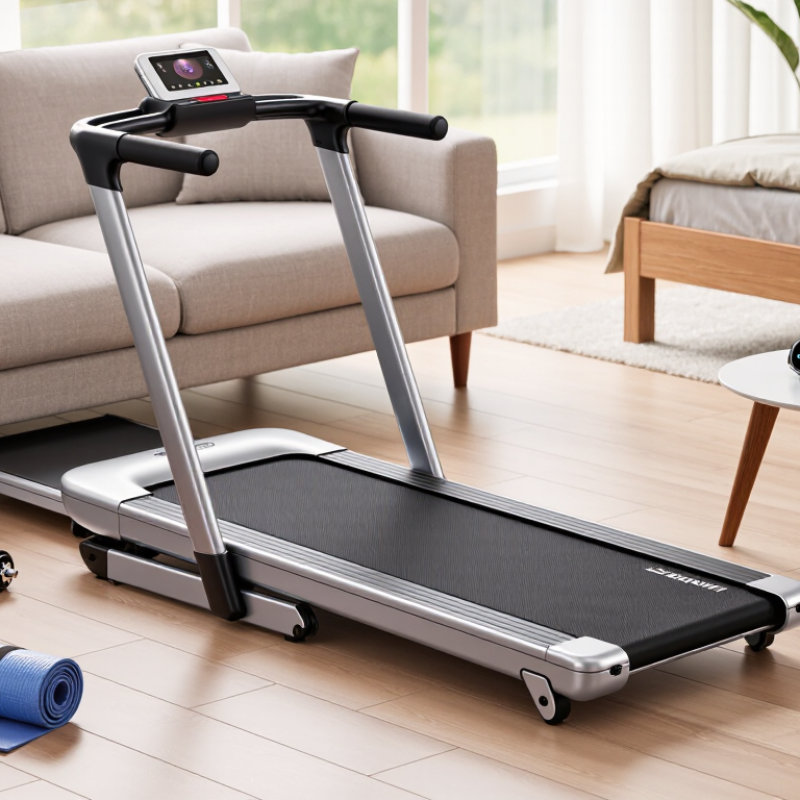
Define Your Portable Treadmill Needs and Available Space
Before choosing a portable treadmill in 2026, define how you will use it.
Walking during work requires different features than short running sessions. Measure your usual pace, expected workout length, and preferred speed. A compact walking pad may suit office movement, but runners need a longer and wider belt.
Space decides more than convenience. Measure the floor area, then leave clearance around the treadmill for safe movement. Check the ceiling height if you plan to jog or use a raised platform. Include the folded dimensions, not only the operating size. A machine that fits under a sofa may still block a doorway.
Storage can become annoying. Measure your closet, bed clearance, and lifting path before buying. Check the treadmill’s weight, wheel quality, and handle design. You should be able to move it without twisting your back. Noise matters in apartments and shared rooms, so review measured sound data when available. I once focused too much on folded thickness and underestimated the effort required to move the unit. That mistake changed my checklist. A realistic plan includes power access, floor protection, and enough open space to stop safely. Leave room for error.

Compare Motor Power, Speed Range, and Walking Surface
How to Choose a Portable Treadmill in 2026?
Motor power matters, but peak horsepower can mislead. Check continuous-duty power instead. A stable motor should maintain pace without sudden noise or belt hesitation. For regular walking, 1.5–2.5 continuous horsepower is usually practical. Faster users may need more. The World Health Organization recommends 150–300 minutes of moderate activity weekly, so durability matters more than a dramatic maximum-speed figure. A treadmill used five days weekly faces repeated thermal stress.
Speed range should match your real routine. A 0.5–4 mph range suits desk walking and steady exercise. Runners need about 6–10 mph, but many portable models feel unstable above 7 mph. Walking speed is not the same as safe running speed. I have found that a small speed increase can expose belt vibration quickly. That detail is easy to miss in product listings.
Tips: Measure the walking surface before buying. Aim for at least 48 inches long and 18 inches wide for comfortable walking. Taller users may need more length. Check belt noise, side-rail space, folding weight, and deck cushioning in person. The American College of Sports Medicine emphasizes regular, sustainable activity, yet my own mistake was choosing portability over stride comfort. A lighter machine is not automatically better. Read the continuous-power specification, not only the peak number.
How to Choose a Portable Treadmill in 2026? - Compare Motor Power, Speed Range, and Walking Surface
| Portable Treadmill Type | Rated Motor Power | Maximum Speed | Walking Surface | Recommended User Height | Maximum User Weight | Deck Cushioning | Folded Storage Profile | Best Use |
|---|---|---|---|---|---|---|---|---|
| Under-Desk Walking Pad | 1.0–1.5 CHP | 4–6 km/h | 100–120 × 38–42 cm | Up to about 180 cm | 90–100 kg | Basic multi-layer belt | Slim; usually stored under furniture | Light walking while working or watching television |
| Compact Walking Treadmill | 1.5–2.0 CHP | 6–8 km/h | 110–125 × 40–45 cm | Up to about 185 cm | 100–110 kg | Basic elastomer or foam cushioning | Flat or partially folding | Regular walking in small apartments |
| Folding Walking-and-Jogging Treadmill | 2.0–2.5 CHP | 8–10 km/h | 120–135 × 42–46 cm | Up to about 190 cm | 110–120 kg | Multi-zone shock absorption | Folds vertically or horizontally | Brisk walking and occasional light jogging |
| Compact Jogging Treadmill | 2.5–3.0 CHP | 10–12 km/h | 125–140 × 44–48 cm | Up to about 195 cm | 120–130 kg | Enhanced elastomer cushioning | Folding frame with transport wheels | Frequent home jogging and moderate training |
| Portable Incline Treadmill | 2.5–3.5 CHP | 10–14 km/h | 125–145 × 45–50 cm | Up to about 195 cm | 120–135 kg | Multi-layer cushioning with reinforced deck | Folding frame; heavier to move | Incline walking, hill workouts, and jogging |
| Performance-Focused Portable Treadmill | 3.0–4.0 CHP | 14–16 km/h | 135–150 × 48–52 cm | Up to about 200 cm | 130–150 kg | Advanced shock absorption and rigid deck | Foldable but requires dedicated floor space | Regular running and structured training sessions |
Check Folding Design, Weight, Mobility, and Storage Features
Choosing a portable treadmill in 2026 requires more than checking its folded size. A practical folding design should lock securely and open without sudden movement. Look for clear hinge points, a stable handrail, and a deck that folds smoothly. Measure both positions. Doorways and ceiling height can create surprises.
Weight affects every move. A treadmill under 60 kilograms may still feel awkward on stairs. A centered handle and large transport wheels improve control. Test whether you can tilt it alone without straining your back. Do not trust wheel size alone. Small wheels may struggle on thick rugs or uneven flooring. My earlier assumption was that lighter always meant better. It did not. Very light frames can feel less stable during faster walking.
Storage features deserve equal attention. Check the folded depth, wheel clearance, and the space needed to lift the deck. A compact unit should fit beside a cabinet, under suitable furniture, or against a wall without blocking ventilation. Keep several centimeters around the motor area. Dust and trapped heat may shorten service life. Use a tape measure, then repeat the measurement after folding. Labels are not always perfectly clear. A final test matters: move the treadmill through your actual storage route, including corners and door thresholds.
Evaluate Safety Systems, Noise Levels, and User Comfort
A portable treadmill should feel controlled before it feels fast. Check the emergency stop, side rails, belt alignment, and speed response. The belt should slow quickly when you release the control, without sudden jerking. ASTM F2115 identifies safety considerations for treadmills, including stability, guarding, and user controls. These details matter more than a glossy display.
Noise affects concentration, conversation, and continued use. NIOSH recommends limiting occupational exposure to 85 dBA over an eight-hour period, although home workouts are usually shorter. Treat that figure as a warning benchmark, not a perfect treadmill rating. Test the machine on hard flooring, carpet, and at walking speed. A quiet motor may still create loud belt friction. My own buying instinct would favor a lower noise figure, but published measurements often use different distances and conditions. Compare methods, not numbers alone.
Tips: Walk for ten minutes before judging comfort. Notice foot impact, belt width, handrail height, and heat around the motor. The World Health Organization recommends 150–300 minutes of moderate activity weekly, so a narrow belt can become irritating over time. Keep a small clearance around the machine, and verify that the deck remains stable during mounting. Read the manual carefully. It may reveal weight limits, maintenance intervals, and emergency procedures that product pages omit. A softer deck is not automatically safer; excessive cushioning can feel unstable and alter natural stride.
Assess Durability, Smart Functions, Warranty, and Total Cost
How to Choose a Portable Treadmill in 2026?
Durability starts with the frame, belt, rollers, and folding hinges. Check the maximum user weight, motor rating, belt thickness, and hinge construction. A compact treadmill should feel stable when you walk near its top speed. ASTM F2115 offers useful treadmill safety guidance, but compliance does not guarantee long-term durability. I once overvalued a lightweight frame. It was easy to move, yet its belt required frequent adjustment. Inspect return policies, replacement-part availability, and maintenance instructions before buying.
Smart functions should solve real problems, not create distractions. ACSM’s 2024 Worldwide Survey of Fitness Trends ranked wearable technology first, showing strong consumer interest in connected exercise. Useful features include accurate speed tracking, workout history, heart-rate compatibility, and automatic pause protection. Bluetooth speakers are less important. They may fail before the motor. Software support also matters. An attractive app can become useless after updates stop.
Warranty length deserves careful reading. The FTC advises consumers to examine coverage, exclusions, repair procedures, and service costs. A three-year motor warranty may exclude labor, electronics, or transport. Read the fine print. Calculate total cost, including delivery, floor protection, maintenance, electricity, and possible repairs. The U.S. Energy Information Administration reported an average residential electricity price of about 16.5 cents per kilowatt-hour in 2024. At 0.7 kilowatts, five hours weekly costs roughly 30 dollars yearly. Your local rate may differ. A cheaper treadmill can become expensive when its belt, warranty, and service network disappoint.
How to Choose a Portable Treadmill in 2026?
A practical comparison of durability, smart functions, warranty coverage, and estimated first-year ownership cost.
The decision score is a normalized buyer benchmark out of 10: durability combines frame stability, weight capacity, motor load tolerance, and expected use frequency; smart functions cover speed control, workout tracking, Bluetooth, and app compatibility. The estimated first-year cost uses a typical purchase price of $600, $48 delivery, approximately $62 electricity for 30 minutes of daily use at $0.17/kWh, and $120 for routine maintenance. Verify actual specifications, warranty terms, energy prices, and service costs before purchasing.