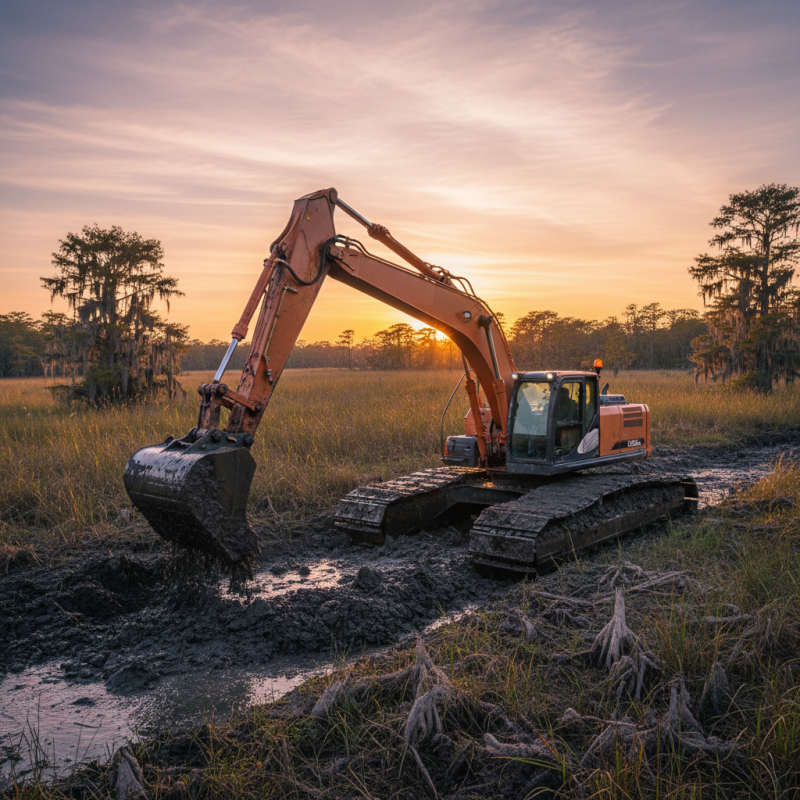
Why Choose a Swamp Excavator for Your Next Project?
When planning your next construction project, consider the unique advantages of a Swamp Excavator. These machines are specially designed for wetland environments. They offer exceptional maneuverability and stability, which makes them ideal for challenging terrains.
Swamp Excavators come with wide tracks that spread their weight evenly. This feature minimizes ground disturbance and maximizes efficiency. Workers can navigate marshes, swamps, and other soft sites that conventional excavators struggle with. The importance of this capability cannot be overlooked.
Choosing a Swamp Excavator can boost productivity, reduce downtime, and lower operational costs. However, it's essential to evaluate the specific needs of your project. Investing in the right equipment is key to achieving successful outcomes. As you explore options, reflect on your project's unique challenges and the value a Swamp Excavator can bring.
Understanding the Unique Capabilities of Swamp Excavators
Swamp excavators stand out due to their unique capabilities. Designed specifically for challenging environments, these machines can operate safely on soft, marshy ground. Their wide tracks distribute weight effectively. This prevents them from sinking into mud or swampy areas.
Unlike traditional excavators, swamp excavators come equipped with specialized features. Some models have extendable booms and custom attachments. These allow for versatility in various projects, whether it’s dredging a canal or clearing debris. Operators find that the maneuverability in tight spaces often improves project efficiency.
However, operating a swamp excavator does have its learning curve. It requires a good understanding of ground conditions and machine capabilities. Mistakes can happen if operators misjudge the terrain. This could lead to potential risks or project delays. Proper training is essential to harness the full potential of these machines. Evaluating terrain before starting the job is crucial for successful outcomes.
Benefits of Using Swamp Excavators in Wetland Projects
Swamp excavators are vital for wetland projects. Their design allows them to navigate muddy terrains with ease. According to the U.S. Environmental Protection Agency, wetlands cover about 5.5 million acres in the U.S. They play a crucial role in flood control, water purification, and habitat preservation. Choosing a swamp excavator can significantly enhance efficiency in these sensitive environments.
One key benefit is reduced site disturbance. Swamp excavators have a floatation system, which minimizes soil compaction. In studies, it has been shown that proper machinery selection can lead to a 30% reduction in environmental impact. They can work on saturated soil without damaging the ecosystem. That aspect is critical when protecting fragile wetlands.
Additionally, swamp excavators can improve project timelines. Their versatility allows operators to tackle various tasks, from excavation to grading. This reduces the need for multiple machines. However, there is a learning curve with these specialized machines. Operators might need training to maximize their potential effectively. Understanding the equipment is essential for achieving the best results while minimizing risks to the environment.
Key Features to Look for in a Swamp Excavator
When selecting a swamp excavator for your project, certain features are crucial. Look for a robust undercarriage designed for muddy terrains. Strong tracks provide stability and prevent sinking. A low ground pressure maximizes flotation, making it easier to maneuver. The digging depth should meet your specific needs. Some excavators can reach significant depths, which is essential for many projects.
Another important aspect is the size and power of the excavator. Larger machines can handle heavier workloads but may struggle in tighter spaces. Consider the engine power as well. It should be sufficient for the tasks you intend to execute. Additionally, hydraulic systems are crucial. They control the attachment movements. Efficient hydraulic functions can greatly enhance productivity.
Pay attention to operator comfort too. A spacious cab with ergonomic controls leads to better efficiency. Visibility from the cab is key for safety. Issues may arise with cramped machines, adding fatigue. Choose a swamp excavator that offers both performance and operator comfort. Reflecting on your project's requirements will lead to a better choice. Aim for a balance between capability and ease of use.
Why Choose a Swamp Excavator for Your Next Project? - Key Features to Look for in a Swamp Excavator
| Feature | Description | Benefits |
| Floatation System | Allows the excavator to operate on soft, muddy surfaces without sinking. | Increased versatility and workability in swampy areas. |
| Extended Reach | Designed with a longer boom and arm for extended digging depth and reach. | Access hard-to-reach areas, enhancing productivity. |
| Variable Track Width | Adjustable tracks to adjust stability based on the terrain. | Optimize performance on both narrow and wide tracks. |
| Powerful Engine | High-torque engine designed to handle challenging terrains. | Efficient operation in tough conditions, increasing job efficiency. |
| Enhanced Stability | Low center of gravity construction to prevent tipping. | Safe operation in unstable environments. |
Comparing Swamp Excavators to Traditional Excavators
When considering excavation projects, the choice between swamp excavators and traditional excavators is significant. Swamp excavators are specifically designed for marshy or soft ground. Their wide tracks distribute weight evenly. This feature helps prevent sinking in muddy areas. In contrast, traditional excavators often struggle in similar conditions, risking site damage or equipment failure.
Swamp excavators also excel in versatility. They can maneuver through water and uneven terrain with ease. This capability allows for efficient digging and movement of materials. Traditional models, however, may require additional equipment to handle wet conditions. This reliance can lead to increased costs and longer project timelines. Choosing the right machine is crucial for successful execution in challenging environments.
However, swamp excavators do present challenges. They can be less efficient on solid ground. Swamp models are generally heavier, which may impact fuel consumption. Regular maintenance is necessary to keep them in optimal shape. Weighing the pros and cons is important for any project manager. Understanding the specific needs can help make the right choice.
Cost-Effectiveness of Swamp Excavators for Specialized Projects
Swamp excavators are essential for specialized projects. Their unique design allows them to work in wetlands and marshy areas where traditional machinery struggles. They can access difficult terrains, making them indispensable in specific contexts. When you consider the expenses of conventional equipment, swamp excavators can present a more cost-effective option due to their efficiency.
For projects that involve significant waterlogged areas, these excavators minimize delays. Their ability to operate without damaging sensitive environments saves on restoration costs. Moreover, they often have faster turnaround times, which can be crucial for tight schedules. Utilizing a swamp excavator might reduce labor costs as well, thanks to their adaptability and range of functions.
Tips: Always assess the project requirements before deciding on the machinery. Understanding the terrain is key. Not all jobs need a specialized excavator. Check whether local regulations impact your equipment choice. Take the time to plan effectively. This can prevent unforeseen expenses and project delays.