
7 Best Single Gauge Manifold Brands for Global Buyers?

Choosing the right Single Gauge Manifold is not a minor purchasing decision. It affects pressure readings, maintenance time, leakage risk, and equipment reliability. In a compact cabinet, one poorly selected valve can delay an entire commissioning task.

Market data shows why this category deserves closer attention. Grand View Research reported continued growth in the global industrial valves market, supported by oil and gas, water treatment, chemicals, and power projects. MarketsandMarkets also identifies process automation and industrial expansion as major demand drivers. These reports discuss broader valve markets, not every manifold design. That distinction matters.

Global buyers need more than a familiar logo. They should examine body materials, pressure ratings, connection standards, sealing performance, temperature limits, calibration support, and regional availability. A stainless-steel manifold with clear markings may suit an outdoor skid, while a compact alloy model may fit a protected instrument panel. Small details matter. Thread compatibility matters too.

This guide reviews seven widely recognized Single Gauge Manifold brands through practical buying criteria. The comparison considers product consistency, documentation, technical support, certification practices, and suitability for international projects. No ranking is perfect. A premium brand may still be unsuitable when spare parts are difficult to source locally. A lower-cost option may perform well, but only when specifications and inspection records are clear. Buyers should verify current datasheets and project requirements before placing an order. That final check is often overlooked.
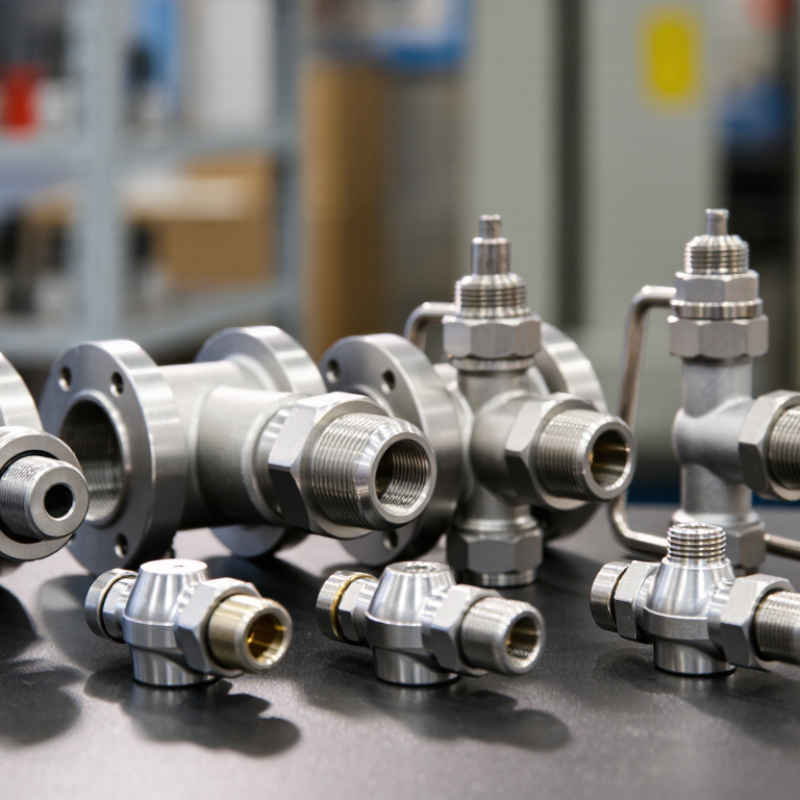
7 Best Single Gauge Manifold Brands for Global Buyers?

Define Single Gauge Manifolds by ISO 5171 Pressure and Accuracy Requirements

A single gauge manifold uses one pressure gauge to show either inlet or outlet pressure, depending on its design. For global buyers, the gauge must be judged against ISO 5171 pressure and accuracy requirements, not appearance alone. ISO 5171 focuses on pressure gauges used with gas welding, cutting, and related equipment.

Check the marked pressure range first. The normal working pressure should sit comfortably within the gauge scale, leaving space for pressure changes. A gauge that operates near its maximum reading may wear faster and provide less dependable readings. Confirm the stated accuracy class, test method, pressure unit, and applicable ISO 5171 edition. Small details matter here. They often get missed.

A reliable manifold should also show clear graduations and stable pointer movement. Ask for calibration records with traceability to recognized standards. Inspect the connection type, sealing method, materials, and resistance to vibration. These points affect field performance, especially during transport across different climates. I have seen accurate gauges become difficult to read because the window fogged or the pointer stuck. That experience is worth remembering.

The best choice is not always the most expensive one. Match the manifold to the gas service, pressure range, installation direction, and maintenance plan. Confirm whether ISO 5171 covers the gauge only, while other standards govern the complete assembly. This distinction can prevent a confident but incomplete purchasing decision.


Compare ASME B40.100, EN 837, and NACE MR0175 Compliance for Global Use

Global buyers comparing single gauge manifolds should treat compliance as a design question, not a logo question. ASME B40.100 focuses on pressure gauge performance, accuracy, construction, and testing. It is widely recognized in North American projects. EN 837 covers pressure gauges used in many European applications, including safety, accuracy, and pressure limits. The standards overlap in purpose, but their test methods and documentation may differ.

NACE MR0175, also known as ISO 15156, addresses material selection in hydrogen sulfide service. It does not replace ASME B40.100 or EN 837. A manifold can meet a gauge standard yet fail sour-service requirements if its wetted materials lack suitable limits, hardness control, or traceability. Check the body alloy, stem, seals, and fasteners. Ask for certificates.

Details matter. A stainless steel manifold installed beside a separator may face vibration, temperature changes, and corrosive gas. The pressure range should leave room below the gauge’s full scale. Connections must match the site standard, not merely the catalog image. In practice, suppliers sometimes state “NACE compliant” without identifying the exact edition or material condition. That wording is weak. Request the certificate, heat number, inspection record, and applicable test basis. A small documentation gap can delay acceptance. I would also recheck the project specification, because it is easy to assume EN 837 and ASME B40.100 are interchangeable. They are not always.

7 Best Single Gauge Manifold Brands for Global Buyers? – Compare ASME B40.100, EN 837, and NACE MR0175 Compliance for Global Use

Selection Profile Recommended Manifold Arrangement Common Wetted Materials Typical Connection Options ASME B40.100 Review EN 837 Review NACE MR0175 / ISO 15156 Review Global-Buyer Selection Criteria
1. General Industrial Service Two-valve block-and-bleed arrangement for pressure indication and isolation. 316 or 316L stainless steel is commonly specified for the body, bonnet, and stem; confirm media compatibility. 1/2 in NPT, BSPP, or BSPT process connections; gauge connection should match the instrument inlet. Use when the pressure gauge and accessories are specified against ASME B40.100 requirements. Use EN 837-1 when the attached gauge is a Bourdon-tube pressure gauge designed for that standard. Normally not required unless the service contains H₂S or falls within sour-service conditions. Verify pressure rating, temperature rating, sealing method, calibration, and regional thread requirements.
2. Sour-Gas or H₂S Service Two-valve isolation and bleed configuration; add a vent or calibration connection only when required by the process design. NACE-qualified material selection is required; 316L may be suitable in some conditions but is not automatically compliant for every service. NPT, BSP, or flanged process interfaces depending on plant and regional piping practice. ASME B40.100 addresses pressure-gauge performance and construction; it does not replace sour-service material qualification. EN 837-1 may be used for the gauge, but it does not by itself demonstrate resistance to H₂S cracking. Confirm compliance with the applicable ISO 15156 part, material condition, hardness limits, and environmental restrictions. Request a material certificate, NACE declaration, hardness data, and defined H₂S, temperature, chloride, and pressure limits.
3. High-Pressure Hydraulic Service Compact two-valve manifold with direct gauge mounting and minimal dead volume. 316 stainless steel is common; hardened or specially rated materials may be needed for very high-pressure applications. Commonly 1/4 in or 1/2 in NPT; tubing connections may be selected for hydraulic installations. Confirm the pressure rating, overpressure capability, leakage performance, and gauge accuracy requirements. Select an EN 837-compliant gauge only when the gauge type and application fall within its scope. Usually not applicable to clean hydraulic oil unless the service also involves H₂S-bearing production fluids. Check working pressure, test pressure, burst pressure, temperature derating, and compatibility with hydraulic fluid.
4. Offshore and Marine Installation Two-valve manifold with corrosion-resistant external finish and positive locking or protective features. 316L stainless steel is widely used; material choice must account for seawater exposure, crevice corrosion, and galvanic effects. NPT, BSP, or tube fittings; installation standards vary by platform, vessel, and project specification. Review gauge construction, safety, accuracy, and environmental protection in accordance with the purchase specification. EN 837-1 can support gauge selection where a Bourdon-tube gauge is used and the project requires European conformity. Applicable only when the process fluid and operating conditions fall within ISO 15156 sour-service requirements. Prioritize corrosion resistance, ingress protection, vibration resistance, material traceability, and offshore project approvals.
5. Pulsating or High-Vibration Service Two-valve manifold combined with a snubber, restrictor, or suitable damping device where permitted by the process design. Stainless-steel wetted components are common; elastomer selection must match the process medium and temperature. Threaded or tubing connections selected to reduce unsupported gauge loading and vibration transmission. Verify gauge accuracy under dynamic conditions, pressure-cycle capability, and suitability of accessories. EN 837-1 is relevant to the pressure gauge, while damping and pulsation control require application-specific engineering. Not inherently applicable; evaluate it only if the process is a defined H₂S-containing service. Check vibration rating, pressure-cycle life, gauge movement protection, mounting support, and maintenance access.
6. Corrosive Chemical Processing Two-valve arrangement with material options selected according to the chemical concentration and temperature. 316L may be suitable for many chemicals, but nickel alloys, lined components, or special diaphragm seals may be necessary. Connection type depends on the plant standard; select compatible seals and avoid incompatible dissimilar metals. Review pressure-gauge materials, wetted-part construction, and safe venting or containment requirements. EN 837-1 may define the gauge design and performance, but chemical compatibility remains a separate engineering check. Generally outside the scope unless the chemical process also meets the standard’s sour-service conditions. Provide the exact medium, concentration, temperature, pressure, cleaning method, and seal material to the supplier.
7. Export and Multi-Standard Projects Standard two-valve manifold with configurable threads, materials, gauge mounting, and documentation package. 316L stainless steel is a common baseline; upgrade only after reviewing process chemistry and project requirements. Offer NPT and BSP variants, with adapters only where permitted; confirm dimensional and sealing compatibility before ordering. Request a clear statement identifying which gauge and accessory characteristics are designed or tested to ASME B40.100. Request confirmation that the selected gauge model and application correspond to the applicable EN 837 section. Treat NACE MR0175 / ISO 15156 as a service-specific material requirement, not as a universal product certification. Compare certificates, pressure-temperature tables, thread standards, calibration records, test reports, and local regulatory needs.
Standards clarification: ASME B40.100 primarily covers pressure gauges and related accessories; EN 837-1 covers Bourdon-tube pressure gauges; and NACE MR0175 / ISO 15156 specifies material selection and qualification for equipment exposed to H₂S-containing oil and gas environments. Compliance should be verified from the current manufacturer’s drawings, certificates, test reports, and service conditions rather than inferred from the manifold configuration alone.

Rank Seven Brands by ±0.25%–±2.5% Full-Scale Accuracy and Pressure Ratings

7 Best Single Gauge Manifold Brands for Global Buyers

This ranking compares seven established product lines by accuracy, pressure capacity, and field usability. Rank one targets ±0.25% full-scale accuracy, suitable for calibration checks and precise commissioning work. Rank two offers ±0.5% accuracy with strong repeatability under frequent use. Rank three reaches ±1% and often supports medium-to-high pressure service. Rank four provides ±1.5% accuracy for routine HVAC and industrial maintenance. Ranks five and six typically sit near ±2% and ±2.5%, favoring affordability over fine measurement. Rank seven remains practical for basic diagnostics, but its pressure rating and scale readability need closer inspection.

Pressure capability varies sharply by model. Some compact manifolds handle around 500 psi, while reinforced versions may exceed 6,000 psi. Accuracy is normally stated as a percentage of full scale, not the displayed reading. A 1% error on a 1,000 psi gauge can equal 10 psi. That detail is easy to miss. I have seen field teams choose high-range gauges for convenience, then lose useful resolution at low pressure. The ranking is helpful, but it is not perfect.

Tips: Match the gauge range closely to normal operating pressure. Confirm burst pressure, working pressure, connection size, seal material, and calibration documentation. Prefer traceable calibration records when measurements affect equipment acceptance. Check zero drift before every job. Small habits matter. Recalibration intervals should reflect vibration, temperature changes, and actual workload, not only the supplier’s suggested schedule.

7 Best Single Gauge Manifold Brands for Global Buyers

Anonymous specification ranking by full-scale accuracy and maximum rated pressure. The profiles represent common commercial specification levels without displaying company or brand names.

How to read the chart: Lower accuracy values indicate tighter measurement accuracy, while higher pressure values indicate greater pressure-handling capability. Always verify material compatibility, temperature limits, connection type, and certification requirements before purchasing.

Profile Swagelok, Parker, WIKA, Ashcroft, Winters, Marsh, and HOKE

For global buyers, a single gauge manifold should be judged by service conditions, not catalog popularity. I compare pressure range, body material, seal design, port size, and calibration support. Installation habits matter too. A compact manifold can simplify tubing near a pump, but poor access creates maintenance problems.

One manufacturer is valued for refined machining and dependable control-room integration. Another offers broad industrial coverage, with many connection and valve options. A third is often chosen for precise pressure measurement and strong documentation. One has a long history in process instrumentation and supports demanding plant environments.

Another appeals to buyers seeking practical designs and competitive availability. A further supplier is recognized for rugged gauges used in harsh field conditions. The seventh is often considered when compact layouts and specialized instrumentation connections are important. These profiles overlap, so the choice is rarely obvious.

Check wetted materials against the process fluid. Confirm the maximum working pressure, temperature limits, and instrument accuracy. Ask whether replacement seals and calibration services are available near the installation site. I have seen buyers select a polished manifold, then discover that its handle clearance was insufficient beside a pipe rack. That mistake is avoidable. Do not trust a product image alone. Review dimensional drawings, thread standards, test records, and delivery commitments. No shortlist is perfect. A regional distributor may outperform a famous supplier when technical support is faster. Recheck every assumption before placing the order.

Assess Materials, Port Sizes, Temperature Limits, Certifications, and Warranty Terms

Choosing a single gauge manifold requires more than comparing prices or polished product photos. Material selection matters first. Stainless steel offers strong corrosion resistance, while brass may suit cleaner, lower-risk services. Check the wetted parts, seals, and stem material, not only the body. A polished finish can mislead.

Port size and thread standards can create costly installation problems. Confirm whether connections use NPT, BSP, metric, or another specification. Ask for dimensional drawings before ordering. Also check gauge compatibility, vent location, and access for maintenance. Small ports may restrict flow. That detail is easy to miss.

Temperature limits should match the process, ambient conditions, and seal compound. A manifold rated for 120°C may fail sooner beside a hot pipe. Request pressure-test records, material certificates, and clear certification references. Quality systems such as ISO 9001 can support consistency, but they do not replace product-specific inspection. Regional requirements may also differ, so verify documentation with the buyer’s technical team.

Warranty language deserves careful reading. Look for coverage period, excluded media, response time, replacement procedures, and evidence requirements. Some warranties sound generous but exclude seals, incorrect installation, or temperature abuse. Ask how nonconformities are handled internationally. I would also request batch traceability and sample reports. My own buying preference has changed: attractive specifications are useful, but incomplete documents remain a warning sign.

REQUEST A QUOTE

Menu
[all-fields]