2026 Best PC200-7 or PC300-8 Which One Should You Buy?
Choosing between a PC200-7 and PC300-8 is not simply a question of size. It is a decision about production, transport, fuel, maintenance, and local parts support. Komatsu specifications typically place the PC200-7 near the 20-ton class, while the PC300-8 belongs closer to the 30-ton class. Their working ranges, bucket capacities, and hydraulic output can differ considerably between configurations.
Industry data supports a careful comparison. Off-Highway Research continues to identify excavators as one of the strongest segments in global construction equipment demand. EquipmentWatch’s lifecycle-cost studies also show that purchase price is only one part of ownership cost. Fuel use, downtime, utilization, and resale value can change the final result. A larger excavator may move more material per hour. It may also spend more money when standing idle.
Mike Vorster, a respected construction-equipment economist, offers a useful warning: “The cheapest machine is rarely the lowest-cost machine.” That principle fits PC200-7/PC300-8 buying decisions. A PC200-7 may suit roadwork, utility trenches, and restricted sites where mobility matters. A PC300-8 can make stronger sense for quarry loading, deep excavation, and high-volume earthmoving. But specifications alone cannot choose the winner. Operator skill, soil conditions, attachment demand, and service history matter more than many buyers admit. Sometimes, the smaller machine is not cheaper. Sometimes, the larger one is simply too much iron. This guide compares both models through productivity, ownership cost, reliability, and real operating conditions.
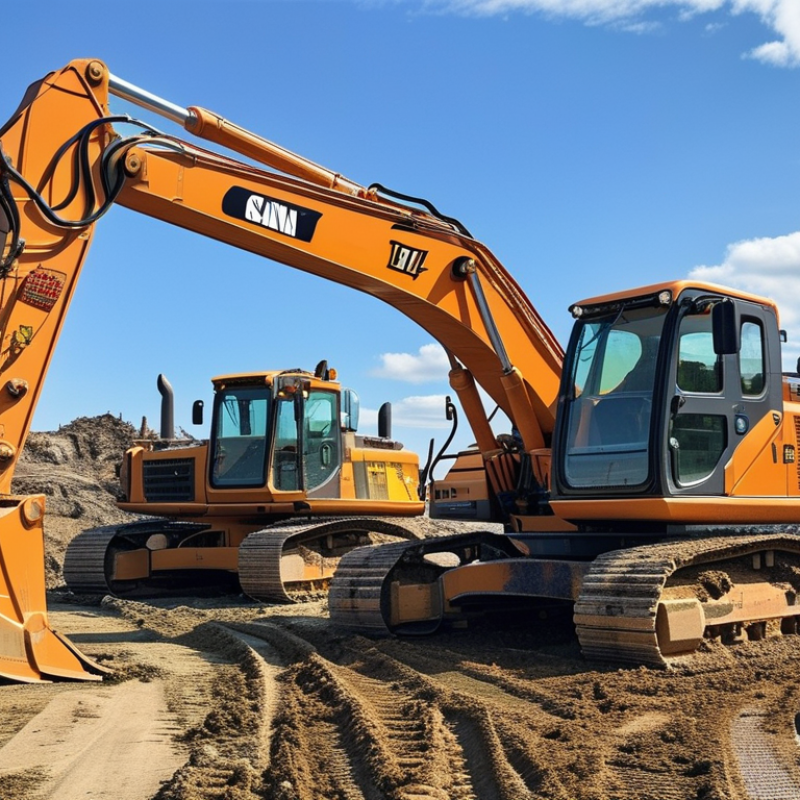
Komatsu PC200-7 and PC300-8: Model Positioning and Core Differences
When comparing the PC200-7 and PC300-8, start with job scale, not advertised power. The PC200-7 fits general excavation, utility trenches, road repairs, and restricted urban sites. Its smaller working envelope is easier to place beside fences and existing foundations. The PC300-8 belongs to heavier production work. It suits quarry loading, deep foundation preparation, large drainage cuts, and sustained bulk digging. More reach and bucket capacity can reduce cycles, but only when trucks and ground conditions keep pace. Otherwise, the larger machine waits.
Field checks show differences beyond size. The PC300-8 normally demands a wider transport plan, firmer access roads, and more room for tail swing. Fuel use and undercarriage wear may rise during light-duty work. The PC200-7 is often simpler to move and economical for mixed daily tasks, though it can feel slow in hard clay or dense rock. Check hydraulic response, boom drift, oil leaks, track tension, hour-meter consistency, and service records before purchase. A cold start reveals more than polished paint. I would also compare actual bucket size with the material being handled; oversized buckets can stress the system. My judgment is not absolute. Site layout, operator skill, attachments, and parts support can reverse the expected choice. Measure the workface. Then price downtime, not only the machine.
Operating Specifications: Weight, Power, Capacity, and Performance
When comparing the PC200-7 and PC300-8, begin with operating weight. A typical PC200-7 weighs about 20,000–21,000 kilograms. The PC300-8 usually reaches 30,000–31,000 kilograms. That extra mass improves stability during heavy digging, especially on uneven ground. It also increases transport cost and ground pressure.
Power changes the working rhythm. The PC200-7 commonly delivers about 110–115 kW, with a bucket capacity near 0.8–1.0 cubic meters. It suits road drainage, utility trenches, building foundations, and medium earthmoving. The PC300-8 may provide roughly 180–195 kW and carry a 1.2–1.6 cubic meter bucket. Its larger hydraulic output handles deeper cuts, dense soil, and higher daily production. More power is useful.
Capacity is not only bucket size. Swing clearance, lifting ability, digging depth, and truck-loading space also matter. On a tight urban site, the smaller excavator often works faster because it repositions easily. On a quarry bench, the larger machine can fill trucks with fewer cycles. I have seen operators choose the bigger excavator, then lose time through poor access and frequent repositioning. That choice was not entirely wrong, but it was incomplete.
Actual performance depends on attachment weight, soil density, hydraulic condition, and operator skill. Published figures can vary by configuration and market. Check the machine plate, service records, undercarriage wear, and a timed loading test before purchase. A clean-looking excavator may still have weak pumps. That part is easy to miss.
2026 Best PC200-7 or PC300-8: Which One Should You Buy?
The PC200-7 is lighter and more fuel-conscious for general excavation, utility work, and easier transport. The PC300-8 provides substantially greater operating weight, engine power, and bucket capacity, making it better suited to heavy digging, large-scale earthmoving, and demanding construction applications. Specifications may vary by attachment and configuration.
Jobsite Suitability: Excavation, Lifting, Quarrying, and General Construction
Choosing between a 20-ton-class and 30-ton-class excavator depends on the jobsite, not the brochure.
For general excavation, drainage, and building foundations, the 20-ton class is usually easier to transport and cheaper to operate. It can work beside fences, roads, and existing structures with less ground disturbance. In soft soil, however, its smaller footprint may still require steel plates or temporary access roads.
The 30-ton class offers deeper reach, stronger breakout force, and faster cycle times in hard clay. It becomes more productive when removing large volumes continuously. The U.S. Geological Survey reported about 1.5 billion metric tons of crushed stone production in 2024, showing why quarry contractors often favor heavier machines for sustained loading and stockpile work.
Lifting needs closer judgment. A larger excavator does not automatically provide safe lifting performance. Operators must check the rated lift chart, attachment weight, working radius, and ground slope. For loading trucks, placing pipes, or handling precast sections, the 30-ton class provides more stability. Yet a 20-ton machine may be more practical on cramped urban sites.
Excavation and lifting often share one machine, which can create compromises. I would not ignore transport costs. Off-Highway Research data continues to identify construction equipment utilization and fleet efficiency as major purchasing factors. That matters during slow weeks. In quarrying, the heavier machine usually wins. In mixed construction, the smaller machine may earn more hours. Field conditions can prove either assumption wrong.
How to Choose Between the PC200-7 and PC300-8 for Your Project
Choosing between the PC200-7 and PC300-8 starts with the project, not the machine’s size. The PC200-7 suits road repairs, foundation work, drainage, and medium-sized earthmoving. It usually fits tighter sites and costs less to transport. The PC300-8 offers greater digging force, reach, and bucket capacity for deep excavation, quarry work, and large construction areas. More output matters when trucks are waiting.
Check the ground conditions carefully. Soft soil may require wider tracks or temporary access roads. A PC300-8 can deliver stronger production, but its weight may damage weak surfaces. Measure the entrance, working radius, transport route, and overhead clearance before renting or purchasing. Small oversights become expensive delays. Fuel use also deserves attention, especially during long shifts. Compare hourly consumption under similar workloads, not only catalogue figures.
Your decision should include local service support, available attachments, operator skill, and spare-part access. A well-maintained PC200-7 may outperform a neglected larger excavator. That is easy to overlook. For short projects, the PC200-7 often provides better cost control and simpler logistics. For continuous heavy digging, the PC300-8 may justify its higher operating expense through faster cycle times. Still, production estimates can be optimistic. Review actual site records, then leave room for weather, operator changes, and unexpected ground conditions.